
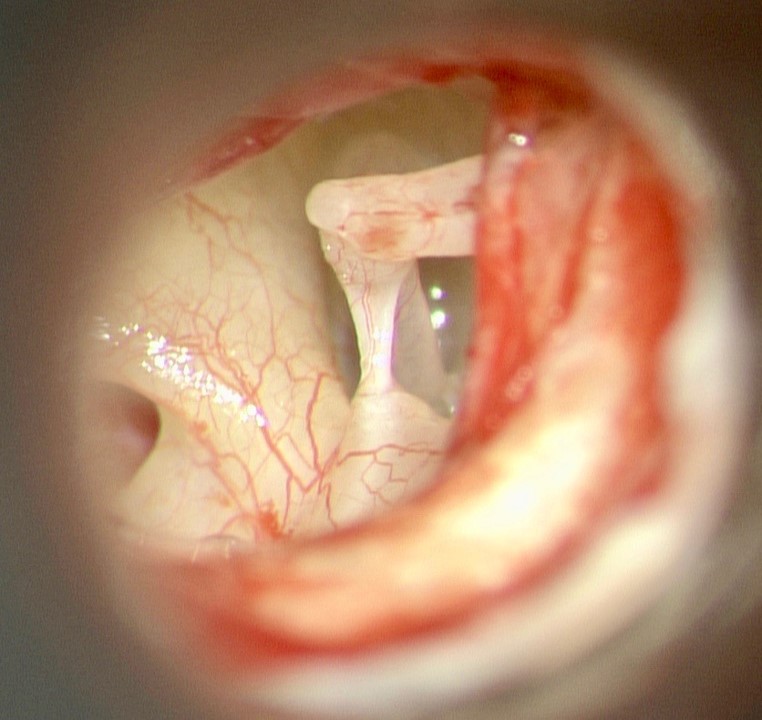
Conductive hearing loss is hearing loss caused by a problem in the outer or middle ear that interferes with the normal transmission of sound to the inner ear.
To understand conductive hearing loss, it helps to understand how normal hearing works. Sound waves enter the ear through the ear canal and reach the eardrum. The eardrum vibrates and transfers those vibrations to three tiny bones in the middle ear:
- Malleus
- Incus
- Stapes
These bones amplify and transmit sound vibrations toward the inner ear, where the cochlea converts them into electrical signals that are sent to the brain. A blockage or structural problem anywhere along the outer or middle-ear pathway can interfere with this process and reduce hearing.
Unlike sensorineural hearing loss, which involves the inner ear or auditory nerve, conductive hearing loss results from a problem with the physical transmission of sound through the ear.
Conductive vs. Sensorineural Hearing Loss
| Type of hearing loss | Where the problem occurs | Common causes |
|---|---|---|
| Conductive | Outer or middle ear | Earwax, infection, fluid, eardrum problems, otosclerosis, ossicular disorders |
| Sensorineural | Inner ear or auditory nerve | Aging, noise exposure, certain medications, inner-ear disorders |
| Mixed | Outer/middle ear and inner ear | Combination of conductive and sensorineural causes |

What are the Health Consequences of Hearing Loss?
Watch this video by Dr. Sperling to learn about how hearing loss affects your health.
What Causes Conductive Hearing Loss?
Conductive hearing loss can have many causes. Some are temporary and relatively simple to treat, while others involve structural problems that may require surgery.
Earwax Buildup
Excessive earwax can block the ear canal and prevent sound from reaching the eardrum normally. Removing the blockage may restore hearing when earwax is the primary cause.
Ear Infection
Middle-ear infections can cause inflammation and fluid buildup behind the eardrum. This can interfere with sound transmission and temporarily reduce hearing.
Fluid in the Middle Ear
Fluid behind the eardrum can prevent the eardrum and middle-ear bones from vibrating normally. This can occur with infections, allergies, or problems with the Eustachian tube.
Perforated Eardrum
A hole or tear in the eardrum can interfere with normal sound transmission. Small perforations may heal on their own in some circumstances, while persistent perforations may require treatment or surgery.
Eustachian Tube Dysfunction
The Eustachian tube helps equalize pressure in the middle ear. When it does not function normally, patients may experience:
- Ear pressure
- Fullness
- Muffled hearing
- Popping or clicking
- Discomfort
Otosclerosis
Otosclerosis is an abnormal bone-remodeling disorder that can cause the stapes to become fixed. When the stapes cannot move normally, sound transmission into the inner ear is reduced, resulting in conductive hearing loss. In some patients, otosclerosis can also affect the inner ear and contribute to sensorineural hearing loss.
Ossicular Chain Problems
The malleus, incus, and stapes form the middle-ear ossicular chain. Damage, fixation, dislocation, erosion, or other abnormalities involving these bones can interfere with sound transmission. Ossicular problems may result from:
- Chronic ear infections
- Trauma
- Previous ear surgery
- Congenital abnormalities
- Cholesteatoma
- Otosclerosis
In selected patients, ossicular chain reconstruction may be used to restore the mechanical transmission of sound.
Cholesteatoma
A cholesteatoma is an abnormal collection of skin cells that can develop in the middle ear and surrounding structures. If it damages the middle-ear bones, it can cause conductive hearing loss and may require surgical treatment.
What Are the Symptoms of Conductive Hearing Loss?
Conductive hearing loss can produce several symptoms. Common symptoms include:
- Muffled or reduced hearing
- Feeling that the ear is blocked
- Difficulty hearing quiet sounds
- Difficulty understanding speech
- Hearing that seems better in one ear than the other
- A sensation of pressure or fullness
- Ear pain when an infection is present
- Drainage from the ear in some conditions
- Tinnitus or ringing in the ear
Some people describe conductive hearing loss as though they are “hearing underwater” or as if one ear is plugged. The symptoms alone cannot determine the cause. An examination and hearing test are needed to identify the type of hearing loss.
Can Conductive Hearing Loss Affect One Ear?
Yes. Conductive hearing loss can affect one ear or both ears, depending on its underlying cause. For example, earwax blockage, a perforated eardrum, an ear infection, or an abnormality involving the middle-ear bones may affect only one ear. One-sided hearing loss can be particularly noticeable when:
- Using the telephone
- Listening in a noisy environment
- Locating where sounds are coming from
- Having conversations with several people
If hearing suddenly changes in one ear, prompt medical evaluation is important because not every case of one-sided hearing loss is conductive.
How Is Conductive Hearing Loss Diagnosed?
Diagnosing conductive hearing loss begins with determining where the hearing problem is occurring.
Medical History
Your physician may ask about:
- When the hearing loss began
- Whether it developed suddenly or gradually
- Whether one or both ears are affected
- Ear infections
- Ear pain or drainage
- Previous ear surgery
- Head or ear trauma
- A history of earwax buildup
- Tinnitus
- Dizziness or balance problems
- A family history of hearing disorders
Examination of the Ear
An examination of the ear canal and eardrum can identify conditions such as:
- Earwax blockage
- Infection
- Fluid
- Eardrum perforation
- Scarring
- Other visible abnormalities
Audiogram
A comprehensive audiogram, or hearing test, measures hearing sensitivity across different frequencies. Formal audiometric testing is the standard method for measuring and monitoring hearing loss.
An audiogram can help determine:
- The degree of hearing loss
- Whether hearing loss is conductive or sensorineural
- Whether one or both ears are affected
- Whether a mixed hearing loss is present
Air and Bone Conduction Testing
Audiologists use air-conduction and bone-conduction testing to help determine whether hearing loss originates in the conductive pathway or the inner ear. A difference between air- and bone-conduction thresholds, known as an air-bone gap, can indicate a conductive component to the hearing loss.
Tympanometry
Tympanometry evaluates how the eardrum and middle ear respond to changes in air pressure. It can provide useful information about:
- Eardrum movement
- Middle-ear pressure
- Fluid behind the eardrum
- Middle-ear function
Imaging
Imaging is not necessary for every patient. When a structural problem is suspected, however, a physician may recommend imaging such as a CT scan of the temporal bones to evaluate the middle-ear bones, inner ear, or surrounding structures.
The appropriate imaging study depends on the suspected cause.
How Is Conductive Hearing Loss Treated?
There is no single treatment for conductive hearing loss because treatment depends on the underlying cause. Treatment may include:
- Removing earwax or another obstruction
- Treating an ear infection
- Treating middle-ear fluid or inflammation
- Repairing a perforated eardrum
- Treating Eustachian tube problems
- Hearing aids
- Bone-conduction hearing devices in selected patients
- Stapes surgery for otosclerosis
- Ossicular chain reconstruction
- Tympanoplasty
- Surgery for cholesteatoma
The goal is to identify and treat the condition interfering with normal sound transmission.
Hearing Aids for Conductive Hearing Loss
Hearing aids may help some people with conductive hearing loss by increasing the intensity of sound reaching the inner ear. They may be considered when:
- The underlying condition cannot be corrected surgically
- Surgery is not appropriate
- A patient prefers a nonsurgical option
- Hearing loss persists after treatment
- There is a mixed component to the hearing loss
The appropriate hearing technology depends on the degree and type of hearing loss and the condition of the ear.
Surgery for Conductive Hearing Loss
Some structural causes of conductive hearing loss can be treated surgically. The type of surgery depends on the structure involved.
Stapedectomy or Stapedotomy
When conductive hearing loss is caused by otosclerosis, the stapes may become fixed and unable to transmit sound normally. A stapedectomy or stapedotomy can bypass the abnormal portion of the stapes using a small prosthesis. The procedure is intended to improve the mechanical transmission of sound to the inner ear.
Tympanoplasty
Tympanoplasty is surgery used to repair certain problems involving the eardrum and middle ear. It may be considered for selected patients with persistent eardrum perforations or other structural abnormalities.
Ossicular Chain Reconstruction
If the small bones of the middle ear have been damaged or are not functioning properly, ossicular chain reconstruction may be considered. The goal is to restore the mechanical pathway that transmits sound from the eardrum toward the inner ear.
Cholesteatoma Surgery
When a cholesteatoma is responsible for conductive hearing loss, surgery may be necessary to remove the abnormal tissue and address damage to the middle-ear structures. The specific surgical approach depends on the extent and location of the disease.
Can Conductive Hearing Loss Be Reversed?
In some cases, yes. Because conductive hearing loss involves the outer or middle ear, treating the underlying mechanical problem may improve or restore hearing. For example:
- Removing earwax can restore hearing caused by blockage.
- Treating an infection may improve hearing associated with inflammation or fluid.
- Repairing a perforated eardrum may improve sound transmission.
- Surgery may improve hearing caused by certain middle-ear structural problems.
However, the outcome depends on the underlying condition and whether there is also an inner-ear or nerve-related component.
Is Conductive Hearing Loss Permanent?
Conductive hearing loss is not always permanent. Some causes are temporary and reversible, while others can cause persistent hearing loss.
The prognosis depends on the cause, duration, severity, condition of the middle ear, and whether sensorineural hearing loss is also present. A hearing test and examination are necessary to determine the likely cause and treatment options.
Conductive Hearing Loss and Tinnitus
Tinnitus, or the perception of sound without an external source, can occur alongside hearing loss. People with conductive hearing loss may experience ringing, buzzing, humming, or other sounds in the affected ear.
However, tinnitus has many possible causes. Persistent or new tinnitus should therefore be evaluated, particularly when it occurs with asymmetric hearing loss, dizziness, ear drainage, or other symptoms.
When Should You See an Ear Specialist?
Consider an evaluation if you experience:
- Persistent muffled hearing
- Hearing loss in one ear
- A blocked or full sensation in the ear
- Recurrent ear infections
- Hearing loss after an ear injury
- Persistent ear drainage
- Tinnitus associated with hearing loss
- Hearing loss that does not improve after an infection
- Difficulty understanding speech
Sudden hearing loss is different. If your hearing decreases suddenly, especially in one ear, seek prompt medical evaluation rather than assuming the ear is blocked with wax or fluid. Sudden sensorineural hearing loss can require time-sensitive evaluation and treatment.
Why Choose Dr. Neil Sperling for Conductive Hearing Loss Treatment?
Dr. Neil Sperling specializes in hearing disorders and surgical treatment of conditions affecting the ear and hearing system in New York City. Depending on the cause of your hearing loss, treatment may include medical management, hearing technology, or procedures designed to restore the mechanical transmission of sound.
The Hearing and Balance Center’s surgical services include procedures such as stapedectomy/stapedotomy, tympanoplasty, and ossicular chain reconstruction. An evaluation can determine whether your hearing loss is conductive, sensorineural, or mixed and help identify the appropriate next step.
Frequently Asked Questions
Conductive hearing loss occurs when there is a problem in the outer or middle ear that prevents sound from being transmitted properly to the inner ear. This can be caused by blockages, infections, fluid buildup, or structural abnormalities that interfere with the normal vibration and transmission of sound waves.
Conductive hearing loss involves problems in the outer or middle ear that block sound transmission, while sensorineural hearing loss results from damage to the inner ear or auditory nerve. Conductive loss often can be treated by addressing physical obstructions or structural issues, whereas sensorineural loss typically involves nerve or cochlear damage.
Common causes include earwax buildup, middle-ear infections, fluid behind the eardrum, perforated eardrum, Eustachian tube dysfunction, otosclerosis, ossicular chain problems, and cholesteatoma. Some causes are temporary and treatable, while others may require surgery.
Symptoms often include muffled or reduced hearing, a feeling of ear blockage or fullness, difficulty hearing quiet sounds or understanding speech, hearing better in one ear, ear pain during infections, drainage, and sometimes tinnitus. People may describe it as hearing underwater or having a plugged ear sensation.
Yes, conductive hearing loss can affect one ear or both, depending on the cause. Conditions like earwax blockage, infections, or structural abnormalities may impact only one ear, which can make hearing challenges more noticeable in certain situations like phone use or noisy environments.
Diagnosis involves a medical history review, physical examination of the ear, and hearing tests such as audiograms. Additional tests like air and bone conduction testing, tympanometry, and sometimes imaging (e.g., CT scans) help determine the location and cause of the hearing loss.
Treatment depends on the cause and may include removing earwax, treating infections or fluid, repairing eardrum perforations, managing Eustachian tube dysfunction, hearing aids, bone-conduction devices, or surgeries such as stapes surgery, ossicular chain reconstruction, tympanoplasty, or cholesteatoma removal.
Otosclerosis is an abnormal bone remodeling disorder that causes the stapes bone in the middle ear to become fixed, preventing it from vibrating normally. This fixation reduces sound transmission to the inner ear, resulting in conductive hearing loss. It may also affect the inner ear and cause sensorineural loss in some cases.
The Eustachian tube helps equalize pressure in the middle ear. Dysfunction can lead to pressure changes, fluid buildup, and inflammation, causing symptoms like ear fullness, muffled hearing, and discomfort, which contribute to conductive hearing loss.





