
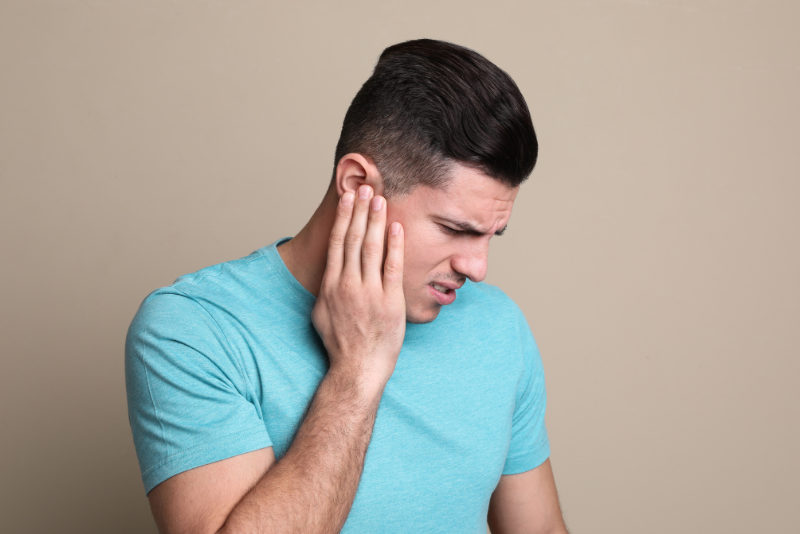
A clogged or blocked ear can be surprisingly uncomfortable. You may feel as though there is water trapped inside your ear, notice that sounds seem muffled, or experience pressure that makes you want to “pop” your ear. Sometimes the sensation disappears within a few hours, while in other cases it can persist for days or even weeks.
There are many possible causes of a clogged ear, and they are not all related to the same problem. Earwax buildup, congestion, Eustachian tube dysfunction, fluid behind the eardrum, and certain types of hearing loss can all produce similar sensations. Understanding the potential cause is important because the appropriate treatment depends on what is actually happening inside the ear.
What Does a Clogged Ear Feel Like?
People describe ear fullness in different ways. Some feel pressure or heaviness in the ear, while others describe a sensation that their ear is plugged, underwater, or stuffed with cotton. You may also notice that your own voice sounds unusually loud or different, or that sounds around you seem less clear than usual.
Ear fullness can affect one ear or both ears. It may occur suddenly or develop gradually. In some cases, swallowing, yawning, or changing position temporarily improves the sensation. In other cases, the feeling remains constant. The pattern and duration of your symptoms can provide useful clues about the underlying cause.
Earwax Buildup Can Make an Ear Feel Blocked
One of the simplest explanations for a clogged ear is impacted earwax. Earwax is normal and serves several useful purposes, including protecting the skin of the ear canal and helping trap debris. Problems can occur when wax accumulates and becomes tightly packed against the walls of the ear canal or eardrum.
When earwax blocks the canal, it can cause muffled hearing, pressure, itching, or a plugged sensation. Hearing may seem to return to normal after the blockage is removed. Cotton swabs can actually make the problem worse by pushing wax deeper into the canal, which is why objects should not be inserted into the ear to try to remove a blockage.
Congestion and Eustachian Tube Dysfunction
Another common cause of ear fullness involves the Eustachian tubes. These narrow passages connect the middle ear with the back of the nose and throat and help regulate pressure on both sides of the eardrum.
When the tubes do not open properly, pressure can build in the middle ear. This may happen during a cold, after an upper respiratory infection, with nasal congestion, or during periods of allergies. You may notice popping, pressure, muffled hearing, or the sensation that your ear needs to clear.
Eustachian tube dysfunction can sometimes resolve as the underlying congestion improves. However, persistent symptoms may require an evaluation to determine whether fluid, inflammation, or another condition is affecting middle-ear function.
Fluid Behind the Eardrum Can Affect Hearing
Fluid can sometimes collect in the middle ear without causing a traditional ear infection. When this occurs, the eardrum may not move normally, which can make sounds seem muffled or distant.
Adults may develop middle-ear fluid after an infection or because of problems with Eustachian tube function. If the sensation of a blocked ear continues after a cold or respiratory illness has otherwise resolved, an examination can determine whether fluid remains behind the eardrum.
Persistent fluid deserves particular attention when it occurs on only one side. A specialist can evaluate the ear and determine whether additional testing is appropriate.
Sometimes a Clogged Ear Is Actually Hearing Loss
Not every sensation of ear blockage is caused by something physically blocking the ear. Certain types of hearing loss can create a feeling that sounds are muffled or unclear, which some people interpret as a plugged ear.
This is one reason persistent ear fullness should not automatically be treated as an earwax problem. If removing wax does not improve hearing, or if there is no significant wax present, a hearing evaluation may help identify whether the problem originates in the middle or inner ear.
A hearing test provides important information about how well the ear is detecting different frequencies and whether hearing loss is conductive, sensorineural, or mixed.
When Should You See an Ear Specialist?
A clogged ear that clears quickly is usually less concerning than symptoms that persist or repeatedly return. You should consider an evaluation if ear fullness lasts for more than a few days, is accompanied by noticeable hearing loss, occurs repeatedly, or affects only one ear.
You should also seek prompt medical attention for significant ear pain, drainage, sudden hearing changes, severe dizziness, or other unusual symptoms. Sudden hearing loss in particular requires urgent medical evaluation because some causes are time-sensitive.
An ear specialist can examine the ear canal and eardrum, evaluate middle-ear function, and perform hearing testing when appropriate. These steps can help distinguish a simple blockage from a condition requiring additional treatment.
Don’t Assume a Clogged Ear Is Just Earwax
The sensation of a clogged ear is common, but the cause is not always obvious. Earwax, congestion, Eustachian tube dysfunction, middle-ear fluid, and hearing loss can all produce similar symptoms.
If the feeling of fullness does not go away or is accompanied by hearing changes, getting the ears evaluated is the best way to determine what is causing the problem. An accurate diagnosis can prevent unnecessary treatment and help address the underlying condition rather than simply treating the sensation.
Frequently Asked Questions
A clogged ear can cause sensations such as pressure, fullness, muffled hearing, or the feeling that the ear is plugged or underwater. Some people also notice their own voice sounding louder or different. These symptoms can affect one or both ears and may improve temporarily with swallowing or yawning.
Earwax protects the ear canal but can cause problems when it accumulates and becomes impacted against the ear canal walls or eardrum. This blockage can lead to muffled hearing, pressure, itching, or a plugged feeling. Using cotton swabs can worsen the problem by pushing wax deeper into the ear canal.
The Eustachian tubes regulate pressure between the middle ear and the back of the nose and throat. When these tubes fail to open properly due to congestion from colds, allergies, or infections, pressure builds up in the middle ear, causing sensations of popping, pressure, and muffled hearing.
Yes, fluid can accumulate in the middle ear without infection, affecting eardrum movement and causing sounds to seem muffled or distant. This often occurs after infections or due to Eustachian tube problems and may require medical evaluation if persistent, especially if it affects only one ear.
Certain types of hearing loss can create sensations similar to a clogged ear, such as muffled or unclear sounds. If earwax removal does not improve symptoms or if no wax is present, a hearing test can help determine if hearing loss is the underlying cause.
You should see an ear specialist if ear fullness lasts more than a few days, recurs frequently, affects only one ear, or is accompanied by hearing loss, pain, drainage, sudden hearing changes, or severe dizziness. Sudden hearing loss requires urgent evaluation.
Because similar symptoms can be caused by congestion, Eustachian tube dysfunction, middle-ear fluid, or hearing loss, assuming earwax is the cause may delay proper diagnosis and treatment. An evaluation ensures the correct underlying condition is identified and treated appropriately.





