
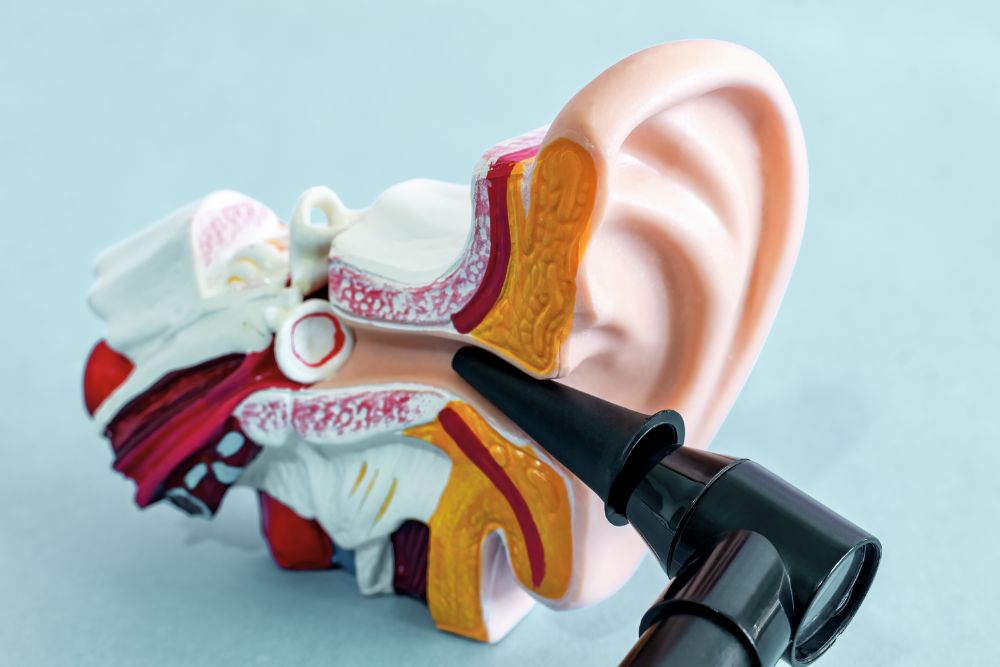
A perforated eardrum, also called a ruptured eardrum or tympanic membrane perforation, is a hole or tear in the thin membrane separating the ear canal from the middle ear. It can cause hearing loss, ear pain, drainage, tinnitus, or dizziness and may increase the risk of middle ear infection.
Many perforated eardrums heal on their own within several weeks. However, some perforations persist and may require an eardrum repair procedure such as tympanoplasty. The appropriate treatment depends on the cause, size and location of the perforation, hearing status, and condition of the middle ear.
If you have a persistent hole in your eardrum, recurring drainage, hearing loss, or other symptoms, an evaluation by an experienced otologist or ENT specialist can determine whether observation, medical treatment, or surgical repair is appropriate.
What Is a Perforated Eardrum?
The eardrum, medically called the tympanic membrane, is a thin layer of tissue that separates the outer ear from the middle ear. It has two important functions:
- It vibrates when sound enters the ear, helping transmit sound to the middle-ear bones.
- It helps protect the middle ear from water, bacteria, and foreign material.
A perforation occurs when a hole or tear develops in the eardrum. Depending on its size and location, the perforation can interfere with sound transmission and cause conductive hearing loss.
What Causes a Perforated Eardrum?
A perforated eardrum can result from infection, injury, pressure changes, or direct trauma.
Ear Infections
A middle ear infection, or otitis media, can cause fluid and pressure to build behind the eardrum. In some cases, the pressure can cause the eardrum to rupture. A perforation caused by an ear infection may result in drainage from the ear and can sometimes reduce the pressure and pain associated with the infection.
Ear Trauma
Objects inserted into the ear can injure or puncture the eardrum. Common examples include:
- Cotton swabs
- Hairpins or other small objects
- Accidental impact to the ear
- Ear-cleaning instruments
Avoid putting objects into the ear canal, particularly if you suspect an eardrum injury.
Changes in Air Pressure
Rapid changes in pressure can injure the eardrum. This is called barotrauma. Potential causes include:
- Air travel
- Scuba diving
- Rapid pressure changes during diving
- Significant pressure or trauma to the ear
Barotrauma can occur when pressure inside and outside the middle ear cannot equalize effectively.
Loud Noise or Acoustic Trauma
Extremely loud sounds or blasts can damage the eardrum and other structures involved in hearing. Acoustic trauma may also injure the inner ear, so hearing should be evaluated after significant noise exposure.
Head Trauma
Significant head injuries can damage the eardrum and other structures of the middle or inner ear.
What Are the Symptoms of a Perforated Eardrum?
Symptoms vary depending on the cause and severity of the perforation. Common symptoms include:
- Hearing loss
- Ear pain
- Fluid or pus draining from the ear
- Bloody ear drainage
- Tinnitus or ringing in the ear
- A feeling of pressure or fullness
- Dizziness or vertigo
- Sudden improvement in pain followed by ear drainage
A perforated eardrum may sometimes cause relatively few symptoms, particularly when the perforation is small. If hearing suddenly decreases, particularly after an injury, loud-noise exposure, or pressure change, prompt medical evaluation is important because the hearing loss may involve structures beyond the eardrum.
Can a Perforated Eardrum Cause Hearing Loss?
Yes. A perforated eardrum can cause hearing loss. The eardrum plays an important role in transmitting sound to the middle-ear ossicles. A hole or tear can interfere with this process and result in conductive hearing loss. The amount of hearing loss depends on factors such as:
- The size of the perforation
- The location of the perforation
- Whether the middle-ear bones are intact
- Whether an infection or fluid is present
- Whether the inner ear has also been affected
Hearing often improves when the eardrum heals, but persistent perforations can continue to affect hearing.
How Is a Perforated Eardrum Diagnosed?
Diagnosis begins with a detailed history and examination of the ear.
Otoscopic Examination
An ENT specialist can often identify a perforation by examining the eardrum with an otoscope or specialized microscopic equipment. The examination can help determine:
- Whether a perforation is present
- Its size and location
- Whether drainage or infection is present
- Whether the middle ear appears abnormal
- Whether there are signs of chronic ear disease
Hearing Test
A comprehensive hearing test or audiogram can determine whether the perforation has caused hearing loss and identify the type and degree of hearing impairment.
Tympanometry
Tympanometry evaluates how the eardrum and middle-ear system respond to changes in air pressure. It can provide additional information about the condition of the eardrum and middle ear. Additional testing or imaging may be considered when the examination suggests damage to the middle-ear bones, chronic ear disease, cholesteatoma, or another underlying conditi
Does a Perforated Eardrum Heal on Its Own?
Many perforated eardrums heal without surgery. Small perforations may close naturally over several weeks. Some take longer to heal, depending on the cause and condition of the ear.
During the healing period, protecting the ear from additional injury and keeping water out of the ear may be recommended. Your physician can tell you when swimming and other activities are safe. A perforation that does not close, repeatedly becomes infected, or causes persistent hearing problems may require additional treatment.
How Is a Perforated Eardrum Treated?
Treatment depends on whether the perforation is new or chronic and whether infection, hearing loss, or damage to other middle-ear structures is present.
Observation
If the perforation is expected to heal naturally and there are no complications, a physician may recommend observation and follow-up.
Treating an Ear Infection
If infection is present, treatment may include medication prescribed specifically for the condition. Not every perforated eardrum requires antibiotics. Treatment should be based on the presence and type of infection and the physician’s examination.
Keeping the Ear Dry
Keeping water out of the affected ear can help reduce the risk of infection while the eardrum is healing. Do not put ear drops into an ear with a suspected perforation unless they have been specifically recommended or prescribed by a healthcare professional.
Eardrum Patch
For selected persistent perforations, an ENT specialist may use a patch procedure to encourage the edges of the perforation to close. A patch may be performed in the office and, in some cases, may need to be repeated.
Tympanoplasty
When a perforation does not heal or requires surgical repair, the procedure commonly used is called tympanoplasty. Tympanoplasty is surgery to repair a perforated eardrum. During tympanoplasty, the surgeon uses tissue to close the opening in the eardrum. Depending on the condition of the ear, the procedure may also address problems involving the middle-ear structures. Tympanoplasty may be considered when:
- The perforation persists
- The ear repeatedly becomes infected or drains
- Hearing loss continues
- The perforation is unlikely to close on its own
- There is associated middle-ear disease
The decision to perform surgery should be based on the individual patient’s examination and hearing evaluation.
What Happens During Eardrum Repair Surgery?
Tympanoplasty is designed to close the perforation and restore the protective barrier of the eardrum. The specific surgical approach depends on the location and size of the perforation and whether other structures of the middle ear are involved.
In some patients, repair of the eardrum may be the only procedure necessary. In others, additional reconstruction of the middle-ear bones may be appropriate if the ossicles have been damaged. A hearing test before and after treatment can help determine how the condition and treatment have affected hearing.
What Happens If a Perforated Eardrum Does Not Heal?
A persistent perforation can leave the middle ear more vulnerable to water and bacteria entering through the ear canal. Potential problems include:
- Recurrent middle-ear infections
- Persistent ear drainage
- Conductive hearing loss
- Chronic middle-ear disease
- Damage to middle-ear structures
- Cholesteatoma in uncommon cases
Most complications are not common, but persistent perforation warrants appropriate follow-up. A cholesteatoma is an abnormal collection of skin cells and other material in the middle ear that can damage surrounding structures if it progresses.
Can You Swim With a Perforated Eardrum?
Generally, you should keep a perforated eardrum dry unless your physician tells you otherwise. Water entering the middle ear through a perforation can increase the risk of infection. Your physician can recommend appropriate protection for bathing and determine when swimming is safe.
Can You Fly With a Perforated Eardrum?
Whether flying is appropriate depends on the cause and current condition of the ear. If the perforation resulted from recent barotrauma, infection, surgery, or another ear condition, discuss air travel with your physician before flying. Pressure changes during air travel can affect the middle ear, particularly when the Eustachian tube cannot equalize pressure normally.
What Should You Avoid With a Perforated Eardrum?
Until the ear has been evaluated and your physician confirms that it is safe, avoid:
- Putting cotton swabs or other objects into the ear
- Swimming without appropriate medical guidance
- Getting water into the affected ear
- Using non-prescribed ear drops
- Attempting to clean the middle or inner portion of the ear yourself
- Exposing the ear to additional trauma or very loud noise
If you have a known perforation, follow the specific precautions provided by your ENT specialist.
When Should You See an ENT Specialist?
Consider an ENT evaluation if you have:
- Persistent hearing loss
- Ear drainage
- Recurrent ear infections
- A known perforated eardrum
- Ear pain after an injury
- Hearing changes after flying or diving
- Tinnitus or dizziness following an ear injury
- A perforation that has not healed
- Repeated problems with the same ear
Sudden hearing loss should not automatically be attributed to a perforated eardrum. Sudden sensorineural hearing loss is a different condition that requires prompt evaluation.
What Should You Avoid With a Perforated Eardrum?
Until the ear has been evaluated and your physician confirms that it is safe, avoid:
- Putting cotton swabs or other objects into the ear
- Swimming without appropriate medical guidance
- Getting water into the affected ear
- Using non-prescribed ear drops
- Attempting to clean the middle or inner portion of the ear yourself
- Exposing the ear to additional trauma or very loud noise
If you have a known perforation, follow the specific precautions provided by your ENT specialist.
Why Choose Dr. Neil Sperling for Perforated Eardrum Treatment
If you have a perforated eardrum and hearing loss, an evaluation can determine whether the eardrum is likely to heal on its own or whether additional treatment may be appropriate.
At the Hearing and Balance Center, Dr. Neil Sperling evaluates and treats hearing disorders, including eardrum perforation and conductive hearing loss. His documented areas of expertise include ear drum perforation, tympanoplasty, otitis media, conductive hearing loss, and reconstruction of the ossicular chain.
Dr. Sperling’s current physician profile states that he serves as Medical Director of Hearing Healthcare and Technologies in the Department of Otolaryngology at Lenox Hill Hospital. His education and training listed by the practice include graduation from New York Medical College, residency at the New York Eye and Ear Infirmary, and fellowship training in otologic surgery at the Minnesota Ear Clinic.
The practice lists Manhattan offices at:
Midtown Manhattan
36A E. 36th Street, Suite 200
New York, NY 10016
Manhattan West Side
9 West 67th Street
New York, NY 10023
Phone: 212-889-8575
Frequently Asked Questions
An eardrum perforation is a hole or tear in the tympanic membrane, the thin skin layer separating the outer ear from the middle ear. This damage disrupts the transmission of sound to the ossicular chain, which can impair hearing and increase the risk of infections.
Eardrum perforation often results from injuries such as trauma or sharp objects, and repeated ear infections can also weaken and eventually rupture the tympanic membrane. Such damage may also impact the tiny bones in the middle ear, further affecting hearing.
Symptoms typically include sudden hearing loss, ear pain, drainage of fluid from the ear, ringing in the ear, and a feeling of fullness. If you experience these symptoms, especially after an ear injury or infection, it’s important to seek medical evaluation promptly.
Some small eardrum perforations can heal naturally within a few weeks to months. However, if the perforation persists beyond three months, medical intervention such as surgery is often necessary to close the hole and restore proper ear function.
The primary treatment for persistent eardrum perforation is tympanoplasty, a surgical procedure that repairs the eardrum using a graft, usually taken from behind the ear. This surgery can also reconstruct damaged ossicular bones to improve hearing if necessary.
If left untreated, an eardrum perforation can lead to chronic infections, persistent hearing loss, and damage to the middle ear bones. These complications can severely impact quality of life and may necessitate more complex treatments later on.
The eardrum functions by capturing sound waves and vibrating to transmit these vibrations to the ossicular chain in the middle ear. The ossicles then relay sound to the inner ear, where nerve endings convert them into brain signals for hearing.





