
 Auditory Processing Disorder (APD) is an important topic that merits attention and understanding. Auditory processing refers to the brain’s capacity to recognize and interpret sounds in various environments, including tones, speech, and music. This capability plays a crucial role in effective communication and overall auditory perception.
Understanding Auditory Processing Disorder
Auditory Processing Disorder (APD) is a condition distinguished by an incapacitated ability of the brain to process and interpret sounds. This impairment can arise from a variety of factors, including hearing loss, attention disorders, autism spectrum disorder, or head trauma. Understanding these underlying causes is essential for effectively addressing and supporting individuals affected by APD.
Symptoms may include:
• Challenges in remembering verbal communication
• Problems understanding speech in environments with background noise
• Trouble comprehending complicated instructions
• It is important to note that additional symptoms may vary from person to person
Children with APD
Auditory processing disorders (APD) can impact individuals of all ages, including both children and adults. In children, these disorders may often be misdiagnosed as other conditions, such as ADHD (Attention Deficit Hyperactivity Disorder), ADD (Attention Deficit Disorder), or other learning disabilities. APD can create significant challenges in a child’s ability to focus, read, write, and comprehend verbal instructions, particularly in environments with background noise, such as classrooms. Furthermore, children who are born prematurely or those exposed to alcohol, drugs, and other toxins in utero may have an advanced risk of developing auditory processing disorders.
APD and Adults
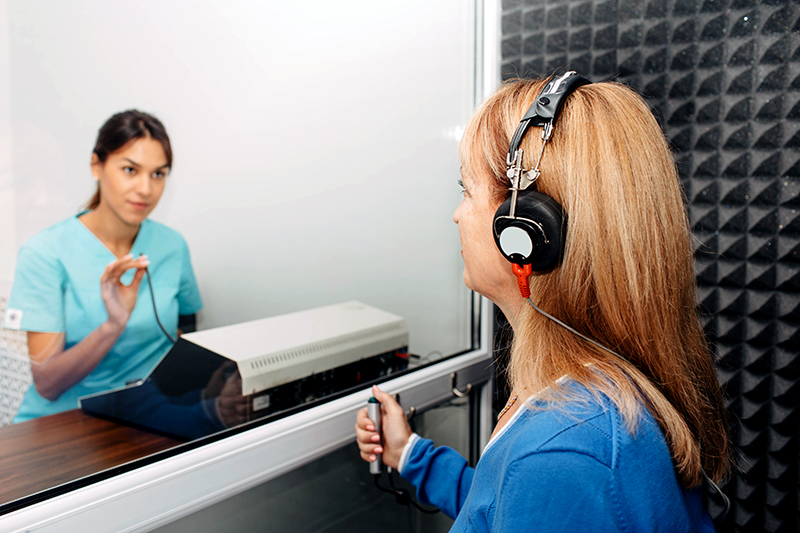
Auditory processing disorder in adults can exist alone or co-exist with hearing loss or other issues such as stroke or head trauma. Formally diagnosing auditory processing disorder happens through multiple tests explicitly designed for different types of processing, such as the detection or discrimination of numbers, beeps, and words. It is known that in adults with hearing loss, their brain’s natural ability to process sound is diminished, often resulting in a delayed understanding of conversation.
Auditory Processing Disorder Treatment Options
In many instances, the treatment for Auditory Processing Disorder involves hearing devices and engagement in auditory training conducted in person with a qualified speech-language pathologist or through a recognized computer-based therapy program.
Recognizing that each individual’s needs are distinct, a hearing care provider must conduct a thorough assessment to properly fit hearing aids and recommend effective listening strategies for challenging environments. Additionally, the hearing care professional can provide information on supplementary resources that may be beneficial.
Frequently Asked Questions
Auditory Processing Disorder is a condition where the brain has difficulty processing and interpreting sounds, such as speech and music. This impairment affects communication and auditory perception, making it challenging to understand sounds correctly in different environments.
Common symptoms of APD include difficulties remembering verbal communication, understanding speech in noisy environments, and comprehending complex instructions. Symptoms can vary widely among individuals.
In children, APD can be misdiagnosed as ADHD or other learning disabilities due to overlapping symptoms like difficulty focusing and comprehending verbal instructions. Children born prematurely or exposed to alcohol or toxins in utero have a higher risk of developing APD, impacting their ability to read, write, and communicate clearly.
Yes, adults can have APD either alone or alongside other conditions like hearing loss or head trauma. Adults with hearing loss may experience delayed understanding of conversations due to diminished brain processing of sound, and diagnosis requires specialized testing.
Diagnosis involves multiple specialized tests that assess different auditory processing abilities such as sound detection and discrimination of numbers, beeps, and words. Evaluation is typically done by hearing care professionals or speech-language pathologists.
Treatment often includes hearing devices and auditory training, either in-person with a speech-language pathologist or through computer-based programs. Hearing care providers tailor interventions based on individual assessments and may recommend strategies for better listening in difficult environments.
Consulting a hearing care provider is crucial because they can conduct thorough assessments, fit hearing aids if needed, recommend effective listening strategies, and provide information on additional resources, ensuring treatment is customized to the individual's unique needs.





