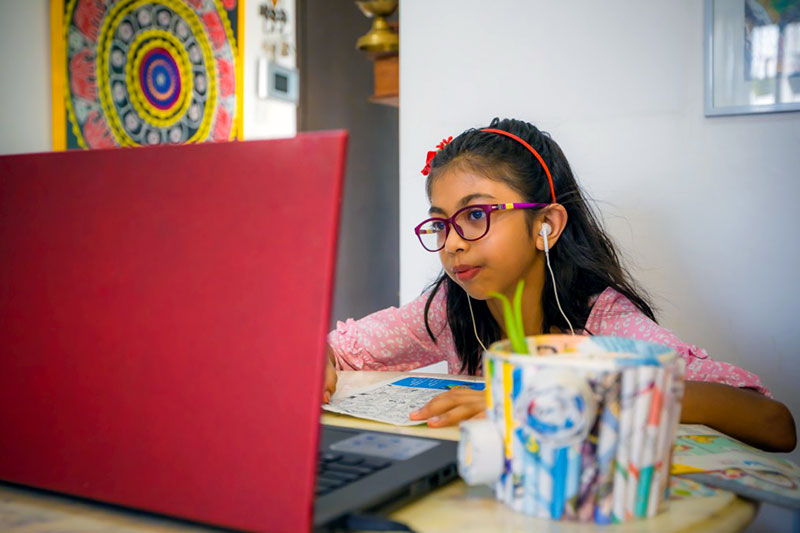
As a new school year begins, students, faculty, and parents face a school unlike any they have ever known. Facing unique challenges becomes even more daunting for students also dealing with hearing impairments. While meant to keep people safe, many new requirements can also create difficulties for the deaf or hard of hearing. However, these challenges come with new opportunities to help these students thrive while also staying within the limits of changing public health measures. If you are unsure of what to be aware of, we have compiled this set of tips to help you be in the know as we adjust to new sets of guidelines for students with hearing impairments.
Tips for Virtual and In-Person Learning Environments for Students With Hearing Impairments
Virtual Learning
When utilizing video platform technology, it is crucial to use audio enhancements or real-time closed captioning to help hard-of-hearing students have better access to the curriculum. At home, make sure that the lighting in the area where your child is doing school work is well lit and free from background clutter and distractions, especially if they are required to use a webcam during class. It’s a good idea to talk with the school’s administrators about what services are available.
In-Person Learning
There have even been significant changes in the classroom; physical distance and face masks can hinder visual cues, like lip reading and facial expressions, and dampen voices, making it more difficult for those with hearing loss to understand instructions. The American Speech-Language-Hearing Association (ASHA) recommends that teachers wear transparent plastic masks or face shields to prevent obstruction to communication. Some schools are implementing audio enhancements in the class to help with volume issues due to physical distancing. Make sure to ask the school faculty about what steps are being taken to mitigate any sound or communications issues that may have arisen.
Alternating between Virtual and In-Person Learning
Many school districts have been using a hybrid model, alternating between in-person and virtual classrooms. Consistency is vital to a healthy learning environment; going back and forth between learning at school and home can present significant challenges to students as they cope with changing formats. Make sure to double-check to ensure that your child has everything they need for both environments. It is important to talk with your child about how they are doing, be sure to share their experiences with the school so they can make adjustments to better help students cope and thrive during this difficult time.
Frequently Asked Questions
For virtual learning, it is important to use audio enhancements or real-time closed captioning to support students with hearing impairments. Ensure the learning area is well-lit and free from distractions to facilitate lip reading or sign language via webcam. It is also beneficial to communicate with school administrators about available services to assist your child.
Face masks and physical distancing can block visual cues like lip reading and facial expressions while also muffling voices, making it harder for hearing-impaired students to understand instructions. Schools can address this by using transparent masks or face shields and providing audio enhancement devices to improve communication.
The American Speech-Language-Hearing Association (ASHA) recommends that teachers wear transparent plastic masks or face shields to avoid blocking visual communicative cues such as lip movements and facial expressions. This approach helps students with hearing loss better understand spoken instructions and engage in the classroom.
Parents should ensure their child has the necessary materials and equipment for both virtual and in-person learning environments. It’s important to communicate regularly with the child to understand their experiences and convey any concerns or needed adjustments to the school to help the student adapt effectively to the alternating formats.
Schools can implement audio enhancement technology such as amplifiers or classroom sound systems to compensate for the reduced sound transmission caused by physical distancing. This ensures that verbal instructions are heard clearly by students with hearing impairments despite spatial separation.
Consistency in learning environments helps students with hearing impairments reduce confusion and stress while adapting to different instructional formats. A stable routine supports better comprehension and emotional well-being, making it easier for them to focus and engage meaningfully in their education.