Has a recent exam revealed a need for a Hearing Assistance Device? It is easy to feel lost and overwhelmed by the number and variety of hearing aid devices available to patients in need. If you are having issues finding a place to start, you have come to the right place.
Just like every condition, every hearing aid is different. Finding the ideal choice can be daunting, but knowing what is out there can help streamline the process and make it easier to find the most suitable device for your needs. Since there is a variety of hearing aid devices available, here are some of the differences as well as the pros and cons for some of the most popular models that you are most likely to come across.
Guide to Hearing Aid Devices: What You Need to Know
BTE or Behind-The-Ear
In this style of hearing aid, the crucial components are safely tucked into housing the fits securely behind the ear, offering advantages in comfort and durability.
The pros:
-
- Durable and resistant to moisture damage
- Extended battery life
- Large controls (easier for those with problems with dexterity)
- More resistant to damage from earwax discharge
The cons:
-
- Easily visible, not easily concealed
- Can interfere with wearing eyeglasses
- Some people complain that wearing these hearing aids feels cumbersome and mechanical.
ITE or In-The-Ear
Like behind-the-ear devices, these also have all of the crucial components within an outer shell that sits in the ear’s outermost region. Larger than canal aids, this type of listening device is simpler to deal with for some individuals.
The pros:
-
- Many patients report that this style is simple to operate.
- Many units come with controls on the device.
- Due to larger batteries, they usually have a longer operating time.
The cons:
-
- Due to its size and location, this device can be adversely impacted by such things as wind and excessive external sounds.
- The device is visible and hard to conceal.
ITC or In-The-Canal
These smaller devices function just like their larger In-The-Ear cousin but can fit deeper into the ear’s external part, making them less noticeable.
The pros:
-
- Much less visible than larger units.
- No interference with eyewear.
- Larger battery and longer operation time than smaller units.
- They can feature controls on the outside of the unit.
The cons:
-
- Some people complain that wearing these hearing aids feels cumbersome and mechanical.
- Even though it comes in a minimal size, it can still be visible to the naked eye.
- It can be challenging to handle and operate for those with dexterity issues.
- Susceptible to moisture and water damage.
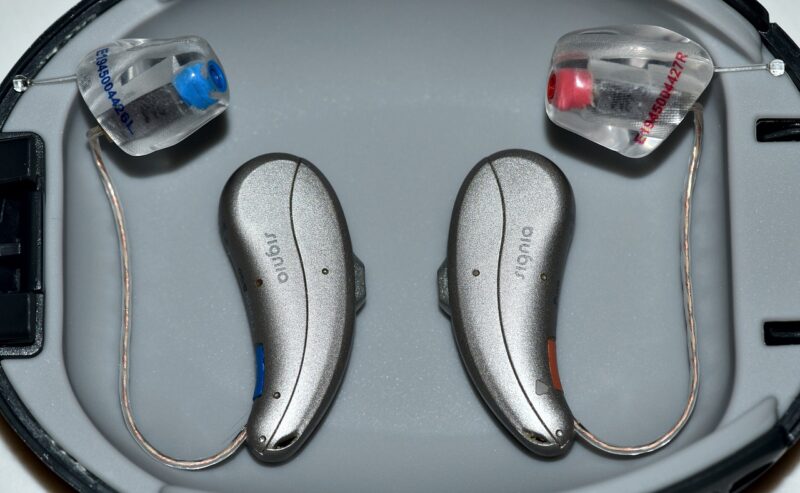
RIC or Receiver-In-Canal
These devices can look a lot like behind-the-ear units, with a crucial difference; this device has the speaker inside the ear canal.
The pros:
-
- Slightly less visible than BTEs.
- Compact and comfortable design.
- Patients report a very natural quality of the sound produced.
- Larger battery and longer operation time than smaller units.
The cons:
-
- The speaker on this unit is prone to damage from clogging from wax and is susceptible to moisture and water damage.
- It can be challenging to handle and operate for those with dexterity issues.
CIC or Completely-In-Canal
One of the smallest devices available, this style is small enough to fit inside the ear canal itself.
The pros:
-
- One of the smallest designs readily available.
- Superb sound quality.
- Discrete and easy to conceal.
The cons:
-
- The device is too small to allow for external controls.
- Due to its miniature size, this device and its batteries can be challenging to handle and operate for patients with dexterity issues.
- This style has shortened operating times due to small batteries.
- Susceptible to moisture and water damage.
IIC or Invisible-In-the-Canal
Quite possibly, the most miniature styles developed. These units are almost invisible to anyone more than a few feet away. These devices fit deep inside the ear canal and are intended for moderate to mild cases of hearing loss.
The pros:
-
- Extremely small size.
- Superb sound quality.
- Discrete and easy to conceal.
The cons:
-
- The device is too small to allow for external controls.
- Due to its miniature size, this device and its batteries can be challenging to handle and operate for patients with dexterity issues.
- This style has shortened operating times due to small batteries.
- Susceptible to moisture and water damage.
Frequently Asked Questions
The primary types of hearing aids include Behind-the-Ear (BTE), In-the-Ear (ITE), In-the-Canal (ITC), Receiver-In-Canal (RIC), Completely-In-Canal (CIC), and Invisible-In-the-Canal (IIC). Each type varies in size, visibility, battery life, and suitability depending on hearing loss severity and user needs.
BTE hearing aids are durable, moisture-resistant, have longer battery life, and are easier to operate for those with dexterity issues due to larger controls. However, they are more visible, can interfere with eyeglasses, and some users find them cumbersome or mechanical to wear.
ITE hearing aids are generally easy to operate with external controls and longer battery life. However, their larger size makes them more visible and they may be impacted by wind and external noises, which can affect sound quality.
Miniature devices like Completely-In-Canal (CIC) and Invisible-In-the-Canal (IIC) hearing aids are ideal for discretion as they fit deep inside the ear canal, making them nearly invisible. They provide excellent sound quality but may have shorter battery life and can be difficult to handle for those with dexterity challenges.
Smaller hearing aids like CIC and IIC often lack external controls, making them harder to adjust. Their miniature size also means shorter battery life and potential difficulty for users with dexterity issues. They are also more susceptible to moisture and water damage.
RIC hearing aids place the speaker inside the ear canal, closer to the eardrum, which can provide clearer and more natural sound quality. They are also more compact and slightly less visible than Behind-the-Ear aids, combining comfort with better auditory performance.
Many hearing aids, particularly smaller styles like ITC, CIC, and IIC, are susceptible to moisture and water damage due to their size and placement inside the ear canal. BTE models are generally more resistant to moisture, offering greater durability for users exposed to humid or wet environments.
Behind-the-Ear (BTE) and In-the-Ear (ITE) hearing aids are often better suited for those with dexterity challenges because they typically have larger controls that are easier to manage. Smaller devices like ITC, CIC, and IIC can be difficult to handle and operate due to their tiny size and lack of external controls.