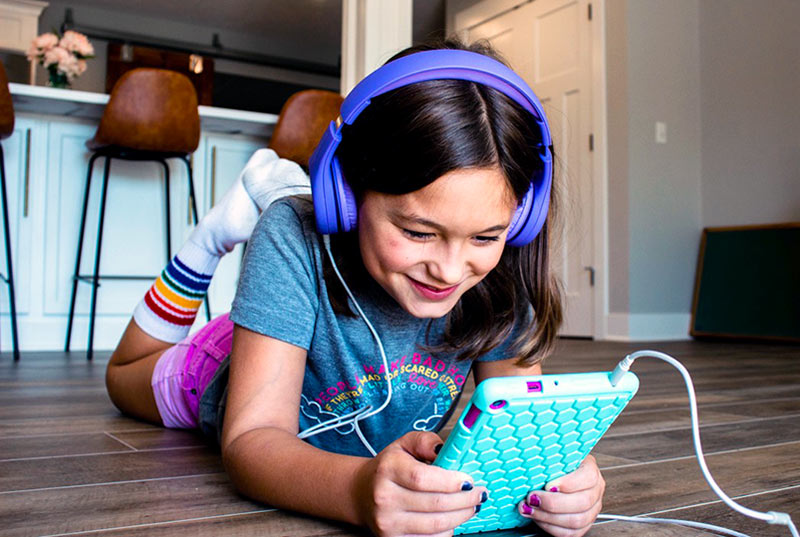
When you have children, it’s natural to want the best for them. However, every parent needs a break, and sometimes popping your child down in front of a computer or iPad can help. Having your child watch or play a game on an electronic device can help drive away boredom and keep them occupied, and if they have a pair of headphones on, that’s even better. You may not want to listen to what is playing from the device, but if you do this, pay attention to the type of headphones you are giving to your child to use. A child’s ears are super sensitive, so using a regular pair of headphones is not recommended. Purchasing your child a pair of headphones meant for kids is necessary if you want to protect their sensitive, developing ears. Sounds over 85 decibels carry the potential to damage hearing, so it is best to know how to pick out the best headphones for kids, ones that are designed with little ears in mind.
Purchasing a pair of headphones designed specifically for children can help protect their developing ears from noise-induced hearing loss. However, knowing how to pick the best headphones for kids is critical, so check out these helpful tips.
• Do not use adult headphones on children unless the device you are using has the ability to limit sound. Sounds over 85 decibels can damage a child’s ears, and most adult headphones can peak around 115 decibels. So unless the device has the ability to set the maximum volume to 85 decibels, purchase a dedicated solution for your child.
• Screen time for a child should be limited, and so should their use of headphones. Allowing your child to use headphones for hours can increase the chances of damage, even if the volume level is limited. So, be sure to limit your child’s use of headphones to a maximum of two hours a day, and have them take frequent breaks to give their little ears a rest.
• Stay away from in-ear headphones, if available. Instead, stick with the traditional headphones that rest on top of the ear. Earbuds can be dangerous to a child’s ears, even to an adult, since the earbud sits closer to the eardrum as it placed in the ear canal. A child’s ears are much more sensitive to noise damage since they are still developing, so don’t risk their safety by using in-ear headphones.
• Headphones, even for children, often come in wired or wireless varieties, but knowing which one is best for you will depend on your situation. Wired headphones are cheaper, so this may be the best option for most. Wireless headphones can be expensive, and if your child is prone to losing or breaking objects, you may want to opt for a cheap pair. However, wired headphones can be a strangling risk for young children, so using a wireless variety may be a better solution.
Frequently Asked Questions
Headphones made for kids are designed to limit volume levels to 85 decibels or lower, protecting sensitive, developing ears from noise-induced hearing damage. Adult headphones often exceed safe volume levels and can harm a child's hearing.
Children should use headphones for no more than two hours a day, with frequent breaks to prevent hearing damage. Prolonged use, even at safe volume levels, can still negatively impact their sensitive ears.
In-ear headphones or earbuds are not recommended for children because they sit close to the eardrum and can cause more damage to sensitive developing ears. Over-ear headphones are a safer alternative as they rest over the ears and reduce direct noise exposure.
Wired headphones are generally cheaper but can pose a strangling risk for young children. Wireless headphones offer more safety from such hazards but tend to be more expensive and may get lost or damaged easily. The choice depends on your child's habits and safety considerations.
Adult headphones can be used only if the connected device allows limiting the maximum volume to 85 decibels. Without this feature, adult headphones can reach volume levels that may damage a child's hearing, so dedicated kids' headphones are safer.
Limiting screen time helps reduce the overall exposure of a child's ears to headphone sound and prevents prolonged ear fatigue or damage. Combining limited headphone use with restricted screen time promotes healthier hearing practices for children.