
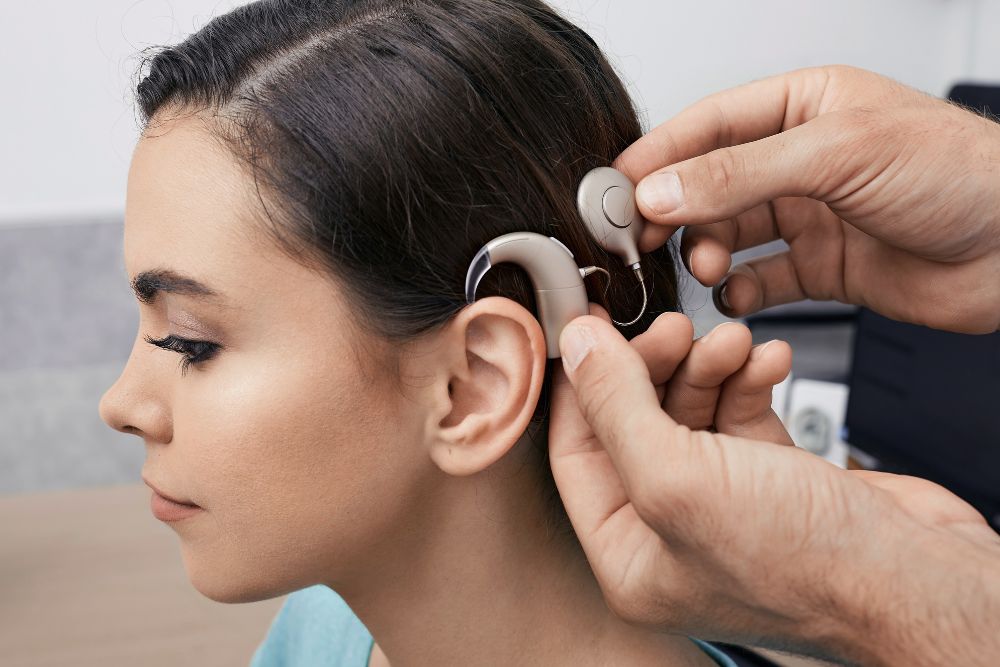
Understanding the Cochlear Implant
Cochlear Implant Surgery in NYC
For people with severe to profound hearing loss who receive limited benefit from hearing aids, a cochlear implant may provide another way to access sound and improve communication.
Unlike a hearing aid, which amplifies sound, a cochlear implant uses electrical stimulation to bypass damaged sensory cells in the inner ear and directly stimulate the auditory nerve. The brain then interprets these signals as sound.
Dr. Neil M. Sperling specializes in hearing restoration and the surgical treatment of hearing loss, including cochlear implantation. A comprehensive evaluation can determine whether a cochlear implant may be appropriate for you or your child
What Is a Cochlear Implant?
A cochlear implant is an electronic medical device designed for people with significant sensorineural hearing loss who do not receive enough benefit from conventional hearing aids.
The system has two primary components:
- External component: A microphone and sound processor worn outside the ear capture and process sounds.
- Internal component: A receiver and electrode array are surgically placed beneath the skin and inside the cochlea.
The external processor converts sounds into coded electrical signals. These signals are transmitted to the internal implant, which sends electrical stimulation to the electrodes inside the cochlea. The electrodes stimulate the auditory nerve, allowing the brain to perceive sound.
Because a cochlear implant bypasses damaged hair cells in the cochlea, it can provide access to sound when amplification through a hearing aid is no longer sufficient.
Cochlear Implants vs. Hearing Aids
Cochlear implants and hearing aids both help people with hearing loss, but they work in fundamentally different ways.
Hearing aids amplify sound. They make sounds louder so that damaged but functioning parts of the inner ear can detect them more effectively.
Cochlear implants provide electrical stimulation. They bypass damaged portions of the cochlea and directly stimulate the auditory nerve.
A cochlear implant does not restore normal hearing. Instead, it provides a different form of auditory information that can help patients recognize speech, communicate more effectively, and become more aware of environmental sounds.
If hearing aids are no longer providing adequate speech understanding or communication ability, a cochlear implant evaluation may be appropriate.
Who Is a Candidate for a Cochlear Implant?
Cochlear implants may be considered for adults and children with severe to profound sensorineural hearing loss who receive insufficient benefit from appropriately fitted hearing aids.
Candidacy depends on several factors, including:
- The degree and type of hearing loss
- Speech recognition and understanding
- How much benefit you receive from hearing aids
- The condition of the cochlea and auditory nerve
- Your overall medical health
- Previous hearing experience
- For children, age and speech and language development
Children may be candidates for cochlear implantation at a very young age. Early identification and treatment of significant hearing loss can be particularly important because hearing plays a critical role in speech and language development.
The best way to determine whether a cochlear implant is appropriate is through a comprehensive evaluation by an experienced hearing and ear specialist.
How Does Cochlear Implant Surgery Work?
Cochlear implant surgery involves placing the internal portion of the implant beneath the skin behind the ear and inserting a small electrode array into the cochlea.
Before surgery, you will undergo a detailed evaluation to determine whether implantation is appropriate and which device and treatment approach are best suited to your hearing needs.
During surgery, the internal receiver is positioned beneath the skin behind the ear. The electrode array is carefully inserted into the cochlea. The incision is then closed, allowing the implant to remain beneath the skin.
The external sound processor is fitted and activated after the surgical site has had time to heal. An audiologist then programs the device and makes adjustments based on your hearing responses and progress.
What Happens After Cochlear Implant Surgery?
Cochlear implantation is only the beginning of the hearing restoration process.
After the surgical site heals, the external sound processor is activated and programmed. At first, sounds may seem unfamiliar or unusual. The brain needs time to learn how to interpret the electrical signals provided by the implant.
Follow-up appointments are important for programming and fine-tuning the device. Some patients also benefit from auditory rehabilitation or therapy to improve their ability to recognize and understand speech.
The adjustment process varies considerably from person to person. Your hearing history, age, duration of hearing loss, and other factors can influence how quickly you adapt to the implant.
What Are the Benefits of Cochlear Implants?
Cochlear implants can provide substantial benefits for appropriately selected patients with severe hearing loss.
Potential benefits include:
- Improved ability to understand speech
- Greater access to environmental sounds
- Improved communication with family, friends, and coworkers
- Greater ability to communicate by telephone
- Improved ability to follow television and other spoken media
- Greater awareness of sounds in the surrounding environment
- Improved ability to monitor and control your own voice
- For children, improved opportunities for auditory, speech, and language development
Results vary between individuals, and no surgical procedure can guarantee a particular level of hearing improvement.
Do Cochlear Implants Restore Normal Hearing?
No. A cochlear implant does not restore normal biological hearing and does not cure deafness. Instead, it provides electrical stimulation to the auditory nerve that allows the brain to receive and interpret sound information.
Many patients experience significant improvements in speech understanding and communication after implantation, but the experience of sound is different from normal hearing. Patients also need time to adapt to and learn how to interpret the signals provided by the device.
Cochlear Implants for Children
Cochlear implants can be an important treatment option for children with severe to profound hearing loss who receive insufficient benefit from hearing aids.
Early evaluation is particularly important in children because hearing is closely connected to the development of speech and language. Children who are identified with significant hearing loss should be evaluated promptly to determine which treatment options may provide the greatest opportunity for auditory and language development.
The decision to implant a child is individualized and involves hearing testing, medical evaluation, developmental considerations, and discussion with the child’s family and hearing-care team.
Are Cochlear Implants Covered by Insurance?
Many health insurance plans provide coverage for cochlear implantation when a patient meets the insurer’s medical criteria. Coverage varies by insurance company and individual policy. Insurance may also cover some of the associated evaluations, programming, rehabilitation, and device-related services.
Our team can help you understand the evaluation and insurance process and determine what steps are necessary to assess your coverage.
Why Choose Dr. Neil Sperling for Cochlear Implant Evaluation?
Choosing a cochlear implant is an important decision that requires more than determining whether a patient has significant hearing loss. Dr. Neil M. Sperling is a hearing restoration surgeon who evaluates patients with complex hearing disorders and provides surgical treatment for conditions affecting hearing. His practice combines medical and surgical expertise with audiological evaluation and hearing technology to develop an individualized treatment plan.
If hearing aids are no longer providing the level of hearing or communication you need, a cochlear implant evaluation can help determine whether implantation is an appropriate next step.
Frequently Asked Questions
A cochlear implant is an electronic medical device designed for people with severe sensorineural hearing loss who do not benefit sufficiently from hearing aids. It consists of an external sound processor and an internal receiver with electrodes implanted in the cochlea. The device converts sounds into electrical signals that directly stimulate the auditory nerve, allowing the brain to perceive sound.
Hearing aids amplify sound to make it easier for damaged but functioning parts of the inner ear to detect, while cochlear implants bypass damaged portions of the cochlea and provide electrical stimulation directly to the auditory nerve. Cochlear implants are used when hearing aids no longer provide adequate speech understanding or communication ability.
Candidates typically include adults and children with severe to profound sensorineural hearing loss who receive limited benefit from hearing aids. Factors such as degree of hearing loss, speech recognition, cochlear and auditory nerve condition, overall health, and for children, age and speech development, are considered during evaluation.
The surgery involves placing the internal receiver beneath the skin behind the ear and inserting an electrode array into the cochlea. After healing, the external sound processor is fitted and activated. The procedure requires a detailed pre-surgical evaluation to determine suitability and device selection.
After surgery and healing, the external processor is activated and programmed. Sounds may initially seem unusual as the brain adapts to electrical signals. Follow-up appointments for device adjustments and auditory rehabilitation are important to improve speech recognition and communication.
No, cochlear implants do not restore normal biological hearing or cure deafness. They provide electrical stimulation to the auditory nerve, enabling the brain to interpret sound information differently. Patients often experience improved speech understanding but must adapt to the new auditory experience.
Benefits include improved speech understanding, better access to environmental sounds, enhanced communication abilities including telephone use, and for children, improved speech and language development. Results vary by individual and no guarantee of hearing improvement can be made.
Yes, cochlear implants can be an important option for children with severe hearing loss who do not benefit from hearing aids. Early evaluation and implantation are critical for supporting speech and language development. The decision involves medical, developmental, and family considerations.
Many health insurance plans cover cochlear implantation if the patient meets medical criteria, including evaluations, programming, and rehabilitation services. Coverage varies by insurer and policy. The medical team can assist in understanding and navigating insurance coverage.





