
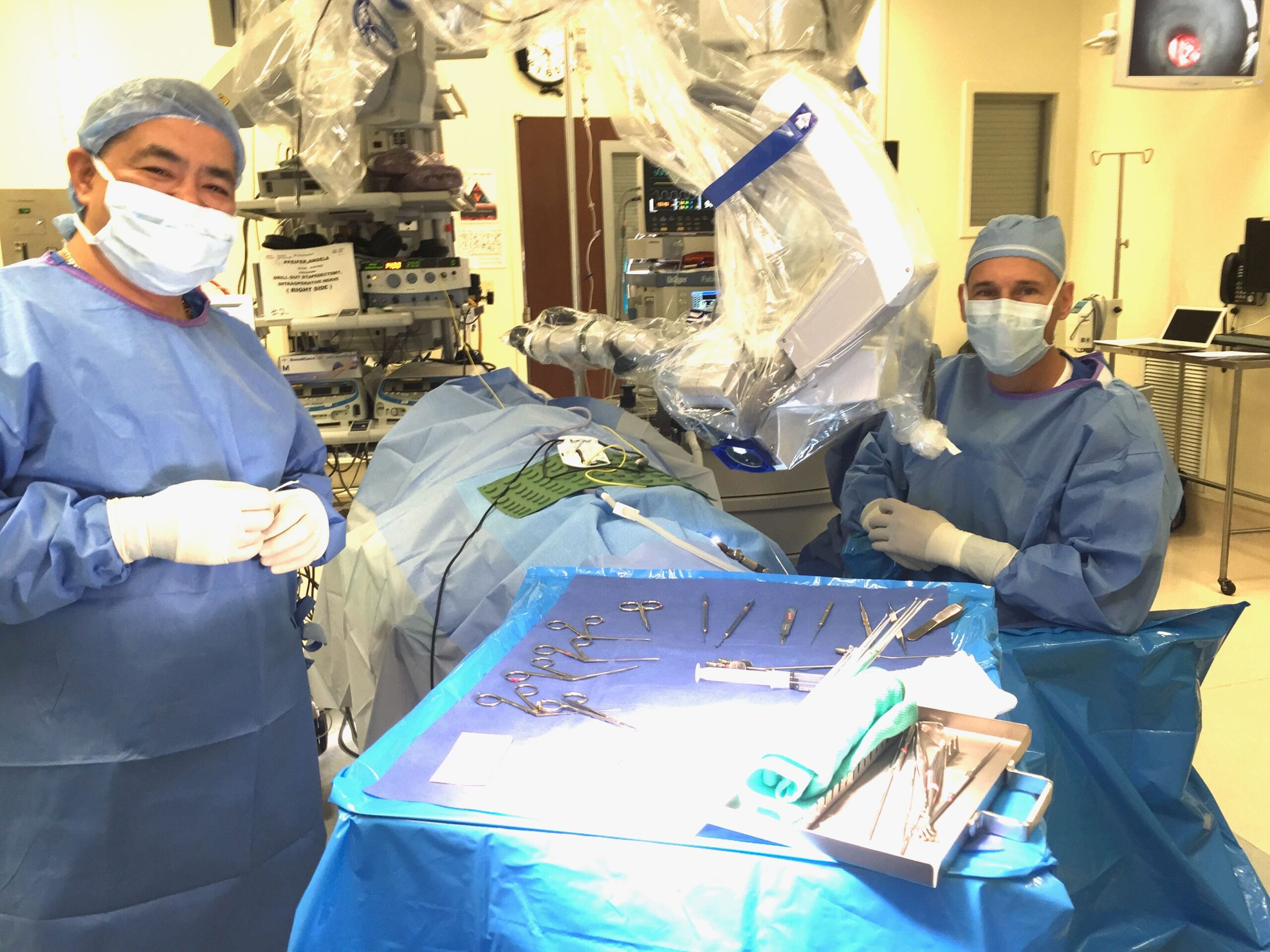
What is Stapes Surgery?
Stapedectomy and stapedotomy are microsurgical procedures used to treat conductive hearing loss caused by an immobile stapes, most commonly from otosclerosis. During stapes surgery, the surgeon uses a prosthesis to restore the transmission of sound from the middle ear to the inner ear.
Dr. Neil Sperling is an otologist and hearing restoration surgeon in New York City who specializes in disorders of hearing, including otosclerosis and stapes surgery. He has performed more than 1,000 stapedectomy and stapedotomy procedures and has published and taught extensively in the field of otology.
Stapedectomy vs. Stapedotomy: What Is the Difference?
Stapedectomy and stapedotomy are both types of stapes surgery used to treat conductive hearing loss caused by an immobile stapes, most commonly due to otosclerosis. The procedures differ primarily in how the stapes footplate is treated.
During a traditional stapedectomy, part or all of the stapes footplate is removed and replaced with a small prosthesis. During a stapedotomy, a precise opening is created in the stapes footplate and a tiny piston-like prosthesis is placed through the opening to restore the transmission of sound to the inner ear.
What Happens During Stapedectomy or Stapedotomy Surgery?
Stapedectomy and stapedotomy are microsurgical procedures used to treat conductive hearing loss caused by an immobile stapes, most commonly as a result of otosclerosis. The goal of surgery is to restore the transmission of sound from the middle ear to the inner ear.
During stapes surgery, the surgeon carefully evaluates the eardrum and middle-ear bones. In a traditional stapedectomy, part or all of the stapes footplate may be removed and replaced with a small prosthesis. During a stapedotomy, a precise opening is created in the stapes footplate and a tiny prosthesis is placed through the opening to restore the transmission of sound to the inner ear.
Dr. Sperling primarily performs stapedotomy, a refined approach to stapes surgery that uses a precise opening in the stapes footplate rather than removing the entire footplate.
Stapes Surgery May Include:
- Local or general anesthesia: Stapes surgery may be performed using local anesthesia with sedation or general anesthesia, depending on the patient’s circumstances and the surgeon’s recommendation.
- Microscopic examination: The eardrum and middle-ear structures are carefully evaluated during the procedure.
- Precise treatment of the stapes: A stapedotomy uses a precise opening in the stapes footplate to create a pathway for the prosthesis.
- Laser-assisted surgery: A laser may be used to make the precise opening in the stapes footplate.
- Placement of a prosthesis: A tiny prosthetic device is positioned to restore the mechanical transmission of sound from the middle ear to the inner ear.
- Outpatient treatment: Stapes surgery is generally performed as an outpatient procedure, although individual circumstances may vary.
Dr. Neil Sperling’s Experience With Stapes Surgery
Dr. Neil Sperling is an otologist and hearing restoration surgeon in New York City specializing in hearing disorders and ear surgery, including otosclerosis and stapes surgery. He is a board-certified otolaryngologist with fellowship training in otologic surgery and extensive experience treating patients with conductive hearing loss caused by otosclerosis.
Dr. Sperling has performed more than 1,000 stapedectomy and stapedotomy procedures and has extensive experience with the diagnosis and surgical treatment of otosclerosis. His clinical and academic interests include hearing restoration and disorders of the middle and inner ear.
Testimonials
“If you want a physician of intensely high skill who can operate through a keyhole slit a few millimeters across and replace the minute ossicles of the ear with titanium parts, then you go see Dr Sperling. His patients call Dr. Sperling a miracle worker. I interviewed a dozen of them, and far more than one, even the calmest among them, say the same thing in the same words.”
– Dr. Conrad Fischer in his book Routine Miracles
Why Patients With Otosclerosis Seek Care From Dr. Sperling
- Extensive stapes surgery experience: Dr. Sperling has performed more than 1,000 stapedectomy and stapedotomy procedures.
- Specialized otology training: He completed fellowship training focused on otologic surgery and disorders of the ear and hearing.
- Otosclerosis expertise: His clinical and research interests include otosclerosis, a condition that can cause conductive hearing loss by affecting movement of the stapes.
- Academic experience: Dr. Sperling has held academic faculty positions and has published and presented on topics related to otology and hearing disorders.
- Hearing restoration focus: His practice focuses extensively on the diagnosis and treatment of hearing loss and conditions affecting the middle and inner ear.
- Individualized treatment: Patients are evaluated individually to determine whether stapedotomy, stapedectomy, hearing aids, or another treatment approach is appropriate.
Watch Dr. Sperling Perform Stapes Surgery
Stapedectomy/Stapedotomy Surgery FAQs
When is Surgery Needed?
When Is Stapes Surgery Needed?
Stapes surgery may be recommended when the stapes bone is fixed, most commonly because of otosclerosis, and the resulting conductive hearing loss is affecting your ability to hear and communicate. The decision to have surgery depends on the severity of hearing loss, hearing test results, your symptoms, and your overall ear health.
For some patients, a hearing aid may provide adequate hearing improvement without surgery. When surgery is appropriate, a stapedotomy or stapedectomy can bypass the immobile stapes and restore the transmission of sound to the inner ear. Dr. Neil Sperling evaluates each patient individually and recommends the treatment option that best fits their hearing loss and goals.
What Should I Know Before the Operation?
Stapedectomy or stapedotomy is typically done as an outpatient procedure. During your preoperative visit, you’ll review your medical history and undergo a physical examination. Dr. Sperling will discuss the details of the surgery, including risks and benefits. Be sure to inform him about any medications you are taking, including dosage and frequency, as well as any known drug allergies.
What Can I Expect After the Operation?
Most patients can return home shortly after surgery with minimal to no discomfort. To ensure optimal recovery, avoid blowing your nose for a week and keep water out of the ear for at least two weeks. Swimming should also be avoided during this time. If you notice sudden hearing loss, pain, dizziness, or any new symptoms in the operated ear, contact Dr. Sperling immediately. Complications are very rare.
How Long Does the Surgery Take?
Stapedectomy/Stapedotomy surgery is performed under local or general anesthesia in an operating room and usually takes less than 1 hour. After the procedure, patients typically rest for 1-2 hours before being discharged.
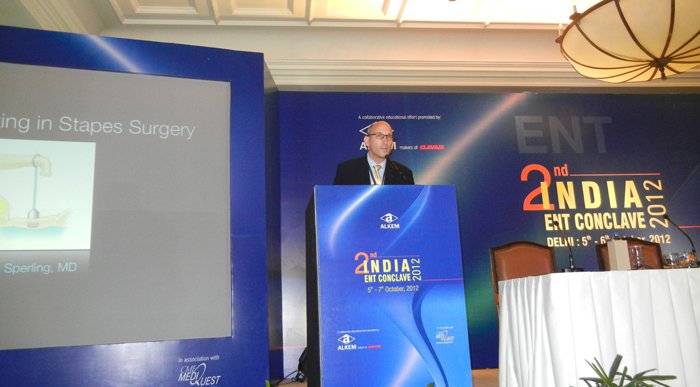
Dr. Sperling speaking at the 2nd India ENT Conclave on Stapedectomy Surgery
Frequently Asked Questions
Stapes surgery, including stapedectomy and stapedotomy, is a microsurgical procedure used to treat conductive hearing loss caused by an immobile stapes bone, most commonly due to otosclerosis. The surgery restores sound transmission from the middle ear to the inner ear using a prosthesis.
The main difference lies in how the stapes footplate is treated. In a stapedectomy, part or all of the stapes footplate is removed and replaced with a prosthesis. In a stapedotomy, a precise opening is made in the footplate and a tiny piston-like prosthesis is inserted to restore sound transmission.
During stapes surgery, the surgeon evaluates the eardrum and middle ear bones, then either removes part or all of the stapes footplate (stapedectomy) or creates a precise opening in it (stapedotomy). A tiny prosthesis is then placed to restore sound transmission. The procedure may use local or general anesthesia and sometimes laser assistance.
Dr. Neil Sperling is a board-certified otologist and hearing restoration surgeon in New York City with fellowship training in otologic surgery. He has performed over 1,000 stapedectomy and stapedotomy procedures and is recognized for his expertise in otosclerosis and hearing restoration.
Stapes surgery is recommended when the stapes bone is fixed, usually due to otosclerosis, causing conductive hearing loss that affects hearing and communication. The decision depends on hearing loss severity, test results, symptoms, and ear health. Some patients may benefit from hearing aids instead of surgery.
Before surgery, patients undergo a preoperative visit to review medical history and physical examination. The surgeon discusses the procedure's risks and benefits. Patients should inform the surgeon about all medications and allergies. The surgery is typically outpatient and may use local or general anesthesia.
Most patients can go home shortly after surgery with minimal discomfort. Recovery instructions include avoiding nose blowing for a week, keeping water out of the ear for two weeks, and avoiding swimming. Patients should contact their surgeon immediately if they experience sudden hearing loss, pain, dizziness, or new symptoms.
The surgery typically takes less than one hour and is performed under local or general anesthesia in an operating room. After the procedure, patients usually rest for 1-2 hours before being discharged home the same day.
Yes, stapes surgery is generally performed as an outpatient procedure, allowing patients to return home the same day. However, individual circumstances may vary based on patient health and surgical factors.





