
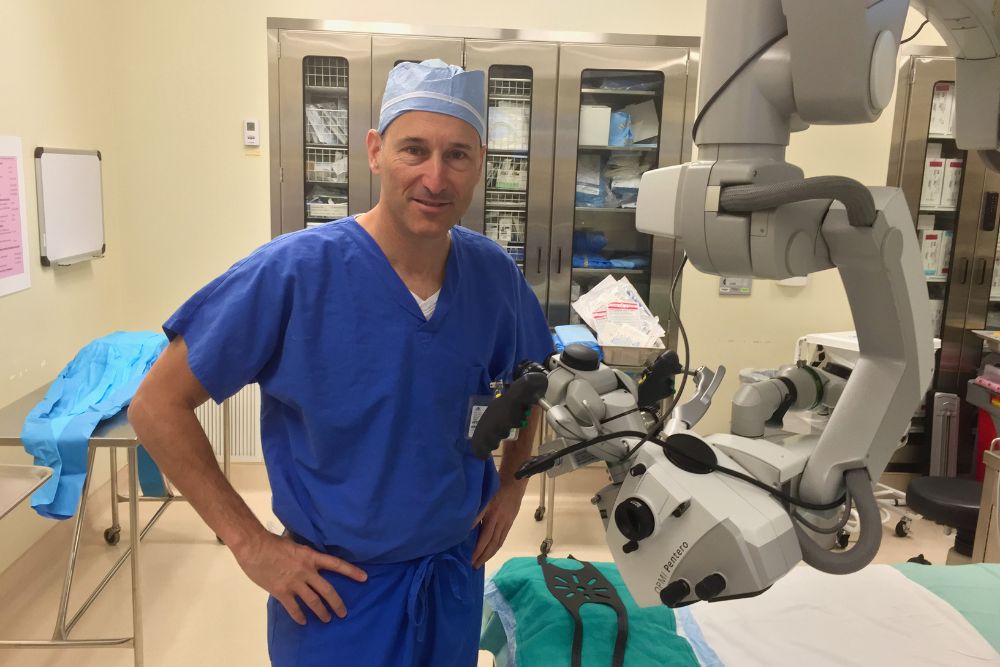
Ear and hearing surgery may be recommended when a problem involving the outer ear, middle ear, inner ear, or hearing pathway cannot be adequately treated with medication, hearing aids, or other nonsurgical options.
At the Hearing and Balance Center of Dr. Neil M. Sperling, patients are evaluated to determine the cause and type of hearing disorder before a surgical option is considered. Depending on the diagnosis, treatment may include stapedectomy or stapedotomy, tympanoplasty, cochlear implantation, cholesteatoma surgery, or ossicular chain reconstruction.
The goal is not simply to perform surgery. The goal is to identify the source of the hearing problem and determine whether surgery, an implantable hearing device, hearing technology, or another treatment is appropriate for the individual patient.
Surgical Solutions We Offer for Your Hearing Needs
Stapedectomy
Tympanoplasty
Your ear drum may have been injured from a list of causes, but tympanoplasty is a surgery designed to repair perforations and return it to its proper state and function.
Cochlear Implants
There’s hope to hear again, even for those with extreme hearing loss. If hearing aids are simply not enough to return your hearing, you may be a candidate for a cochlear implant.
Cholesteatoma
Cholesteatoma surgery removes abnormal skin growth from the middle ear or mastoid, helping prevent infection, protect delicate ear structures, and preserve hearing when possible.
Ossicular Chain Reconstruction
Which Hearing Problems Can Require Ear Surgery?
Ear surgery may be considered for several structural or hearing-related disorders, including:
- Otosclerosis
- Conductive hearing loss
- Perforated eardrum
- Chronic middle-ear disease
- Cholesteatoma
- Ossicular chain damage
- Certain forms of severe or profound sensorineural hearing loss
- Hearing loss that is not adequately addressed with conventional hearing aids
The appropriate procedure depends on where the problem occurs within the hearing system. For example, conductive hearing loss can result from problems involving the eardrum or middle-ear bones, while sensorineural hearing loss involves the inner ear or auditory pathway. This distinction is important because the treatment options can be very different.
How Is the Need for Ear Surgery Diagnosed?
Before recommending surgery, an otologic surgeon typically needs to establish the cause and characteristics of the hearing disorder. An evaluation may include:
Medical and Ear History
The physician may ask about:
- When hearing loss began
- Whether it affects one or both ears
- Whether it is stable or progressing
- Previous ear infections or surgery
- Ear drainage or pain
- Tinnitus
- Dizziness or balance symptoms
- Previous hearing-aid use
- Family history of hearing disorders
Hearing Testing
A comprehensive hearing evaluation can help determine whether hearing loss is conductive, sensorineural, or mixed. Testing may include:
- Pure-tone audiometry
- Speech testing
- Tympanometry
- Acoustic reflex testing
- Other specialized audiologic testing when indicated
For patients being evaluated for stapes surgery, audiometry and middle-ear testing are particularly important in determining whether the hearing pattern is consistent with otosclerosis and whether surgery may be appropriate.
Imaging
Depending on the suspected diagnosis, imaging such as a CT scan of the temporal bones may be considered to evaluate the anatomy of the ear and surrounding structures. Imaging is not necessary for every hearing disorder. The need depends on the clinical findings and suspected cause.
Is Ear Surgery Always Necessary for Hearing Loss?
No. Hearing loss does not automatically mean that surgery is necessary. Depending on the diagnosis, treatment may include:
- Medical treatment
- Hearing aids
- Assistive listening technology
- Bone-conduction hearing devices
- Implantable hearing devices
- Cochlear implants
- Surgical reconstruction
- Observation and monitoring
For some patients, hearing aids or other hearing technology may provide appropriate benefit. For others, a structural problem such as otosclerosis, a persistent eardrum perforation, cholesteatoma, or damaged middle-ear bones may make surgery an important consideration. The treatment decision should be based on the specific cause of hearing loss and the results of the patient’s evaluation.
What Are the Goals of Ear and Hearing Surgery?
The goals vary according to the procedure and diagnosis. Depending on the condition, surgery may be intended to:
Restore sound transmission
Procedures such as stapedotomy and ossicular reconstruction can address mechanical problems in the middle ear.
Repair damaged ear structures
Tympanoplasty can reconstruct a perforated or damaged eardrum.
Remove disease
Cholesteatoma surgery focuses on removing abnormal tissue and controlling disease.
Provide access to an implantable hearing solution
Cochlear implant surgery places the internal component of a cochlear implant for appropriately selected patients.
Preserve hearing when possible
Some ear surgeries are performed with hearing preservation as an important consideration, although individual outcomes cannot be guaranteed.
What Can I Expect Before Ear Surgery?
A surgical consultation generally includes a review of your symptoms, medical and ear history, hearing test results, and the anatomy involved. Your surgeon may discuss:
- The diagnosis
- Whether surgery is appropriate
- The specific procedure being considered
- Nonsurgical alternatives
- Potential benefits
- Potential risks and complications
- Expected recovery
- Hearing rehabilitation
- Whether additional procedures may be necessary
The specific preparation and testing depend on the procedure.
What Is Recovery Like After Ear Surgery?
Recovery varies substantially depending on the operation. After middle-ear surgery, patients may experience temporary:
- Ear fullness
- Changes in hearing
- Mild discomfort
- Dizziness or imbalance
- Sensitivity around the operated ear
Restrictions can also vary. Your surgeon may provide instructions regarding keeping the ear dry, strenuous activity, swimming, air travel, and pressure changes. Hearing may not improve immediately after surgery. Some procedures require time for healing and, when appropriate, hearing rehabilitation before the final result can be assessed. Your surgeon should provide procedure-specific postoperative instructions.
What Are the Risks of Ear Surgery?
Every surgical procedure has potential risks, and the risks depend on the specific operation, the patient’s anatomy, the underlying disease, and whether the procedure is a primary or revision surgery. Potential risks can include:
- Infection
- Bleeding
- Dizziness
- Taste disturbance
- Persistent or worsened hearing loss
- Tinnitus
- Facial nerve injury
- Need for revision surgery
- Failure to achieve the desired hearing improvement
For example, the American Academy of Otolaryngology–Head and Neck Surgery notes that dizziness can occur after stapes surgery and that taste disturbance may occur and generally improves over time; serious complications are uncommon but remain possible. Your surgeon should explain the procedure-specific risks and benefits before surgery.
Why Choose an Otologic Surgeon for Ear and Hearing Surgery?
Ear surgery can involve delicate structures responsible for hearing, balance, and facial nerve function. An otologist or otologic surgeon is an otolaryngologist with focused expertise in disorders and surgery involving the ear and hearing system.
Dr. Neil M. Sperling has focused on hearing disorders and hearing restoration since 1991. He completed a fellowship in Otologic Surgery at the Minnesota Ear Clinic and serves as Medical Director of Hearing Healthcare and Technologies in the Department of Otolaryngology at Lenox Hill Hospital. His clinical expertise includes:
- Otosclerosis
- Stapedectomy and stapedotomy
- Tympanoplasty
- Ossicular chain reconstruction
- Cochlear implantation
- Conductive hearing loss
- Sudden hearing loss
- Cholesteatoma
- Hearing restoration
- Implantable hearing devices
For additional information about Dr. Sperling’s education, board certification, academic appointments, hospital affiliations, professional memberships, publications, and teaching activities, visit his physician profile.
Ear and Hearing Surgery in Manhattan
Dr. Neil Sperling provides ear and hearing care in Manhattan, New York City.
Midtown Manhattan
36A East 36th Street, Suite 200
New York, NY 10016
Manhattan West Side
9 West 67th Street
New York, NY 10023
Phone: 212-889-8575
If you have hearing loss, a persistent eardrum problem, otosclerosis, cholesteatoma, or another ear disorder that may require surgical treatment, a detailed evaluation can help determine which treatment options are appropriate.
Dr. Neil Sperling’s Hearing and Balance Center provides evaluation and treatment for a range of ear and hearing disorders, including surgical and nonsurgical approaches.
Frequently Asked Questions
The Hearing and Balance Center offers several surgical options including stapedectomy or stapedotomy, tympanoplasty, cochlear implantation, cholesteatoma surgery, and ossicular chain reconstruction. Each procedure targets specific ear structures to address different hearing disorders.
Ear surgery is recommended when hearing loss or ear problems cannot be adequately treated with medication, hearing aids, or other nonsurgical options. Conditions such as otosclerosis, chronic middle-ear disease, cholesteatoma, ossicular chain damage, and certain severe sensorineural hearing losses may require surgical intervention.
Diagnosis involves a thorough evaluation including medical and ear history, comprehensive hearing tests like pure-tone audiometry and tympanometry, and sometimes imaging such as CT scans. This helps determine the cause and type of hearing disorder to decide if surgery is appropriate.
No, ear surgery is not always necessary. Treatment options vary and may include medical management, hearing aids, assistive devices, or implantable hearing devices. Surgery is considered mainly when structural problems or specific conditions make it the best option.
The goals vary by procedure but generally include restoring sound transmission, repairing damaged ear structures, removing disease such as cholesteatoma, providing access for implantable hearing devices, and preserving hearing when possible.
Before surgery, you will have a consultation reviewing your symptoms, medical history, hearing test results, and anatomy. The surgeon will discuss the diagnosis, surgical options, nonsurgical alternatives, risks, benefits, recovery, and any necessary preparation or testing.
Recovery varies by procedure but may include temporary ear fullness, hearing changes, mild discomfort, dizziness, and sensitivity around the ear. Restrictions on activities like swimming and air travel may apply. Hearing improvement may take time and require rehabilitation.
Risks depend on the specific surgery and patient factors but can include infection, bleeding, dizziness, taste disturbance, persistent or worsened hearing loss, tinnitus, facial nerve injury, need for revision surgery, and failure to improve hearing.
Conductive hearing loss often results from problems with the eardrum or middle-ear bones, such as otosclerosis or ossicular chain damage. Sensorineural hearing loss involves the inner ear or auditory pathway and may require different treatments like cochlear implants.





