
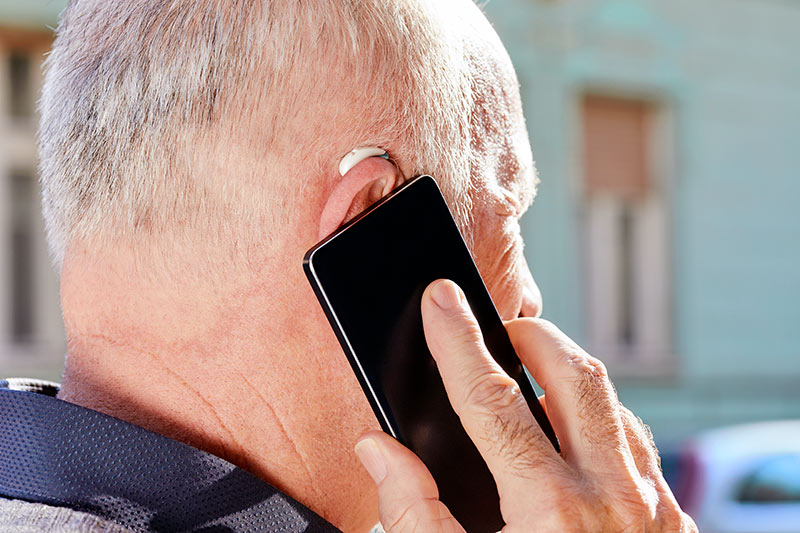
As time moves forward and technology continues to advance, communication options for those who suffer from hearing loss as grown into a full-blown market unto itself, thanks to modern cell phone and computer technology. New communication technology like portable screens and automatic speech recognition has started to open the world to those who are deaf or suffer from hearing loss. It is estimated that over 430 million people worldwide have been diagnosed with some form of debilitating hearing loss. In the past, the most common ways to deal with hearing loss were sign language, lip-reading, and the classic pen and paper set-up. While these techniques worked, it wasn’t perfect a lot of the time, and all have significant flaws. The first step into a technological solution came in hardware such as hearing assistance devices. As time has passed, these devices have become smaller and more functional. Today as the hardware approach plateaus, the emphasis has switched to advanced software to continue innovation to seek more solutions. Below, we have listed some of the latest and greatest hearing loss apps and solutions available for download.
Hearing Loss Apps: Must-Have Apps for Hearing Impairment
Rogervoice
Anyone who has had to deal with hearing loss for a very long time will remember the T.T.S. service and knows how useful it is for making phone calls. The only issue is the cost of the service and equipment needed. A new application called Rogervoice brings T.T.S. to the cell phone. By converting spoken words into text messages, this app is excellent for those with hearing loss and with speech impairments.
TapSOS
Recipient of AbilityNet’s Tech4Good Digital Health Award, TapSOS offers a way to communicate with emergency services directly through the app; voice and hearing are not required when seeking help from police, ambulance, or fire services. The app can store the medical history information and share it with emergency services. Using the GPS in your phone can lead them directly to you.
Braci Sound Alert
This app accesses your phone’s microphone and can alert you to sampled sounds that you want to be aware of happening, like the doorbell, when the pre-recorded sounds are detected by your phone and will alert you with a visual or vibrational signal.
AVA
AVA is arguably the most amazing app on this list, a technical solution for the shortcomings of lip reading. Lip reading is one of the oldest ways to cope with hearing loss. Its greatest weakness is the group setting, as no one can watch multiple faces at once that are facing different directions. AVA uses the latest advances in automatic speech recognition, sending the spoken word and the name of each app user, allowing those who have hearing loss never to miss a word.
Voxsci
An excellent speech transcriber, Voxsci converts voicemail into text and email that can be archived and searched, saved, or shared. Different subscriptions are available for varying levels of usage and need.
As you can see, the future of helpful apps for those with hearing loss is bright, with many apps available and new apps being developed constantly. Many of these are available for the most popular phone operating systems.
Frequently Asked Questions
There are various apps designed to help people with hearing loss, including speech-to-text apps like Rogervoice, emergency communication apps such as TapSOS, sound alert apps like Braci Sound Alert, automatic speech recognition apps like AVA, and voicemail transcription apps like Voxsci. These apps cater to different communication and safety needs.
Rogervoice converts spoken words into text messages in real-time, allowing those with hearing loss or speech impairments to make phone calls more easily. This app brings traditional T.T.S. (text telephone service) capabilities directly to smartphones at a lower cost and with greater convenience.
The AVA app enhances group conversations by using automatic speech recognition technology to transcribe spoken words and identify individual speakers by name. This helps overcome the limitations of lip reading, especially in group settings where watching multiple faces is difficult.
TapSOS allows users to contact emergency services without needing voice or hearing by sending messages through the app. It stores medical history information and uses phone GPS to provide accurate location details to emergency responders, ensuring timely and effective assistance.
Braci Sound Alert uses the phone's microphone to monitor specific sounds such as doorbells or alarms. When these pre-recorded sounds are detected, the app alerts the user through visual or vibration notifications to keep them aware of important environmental sounds.
Yes, apps like Voxsci convert voicemail messages into text and email formats. This allows users to read, archive, search, save, or share their voicemail content, making communication more accessible for those with hearing loss.
Many of the hearing loss apps mentioned are available for the most popular phone operating systems, ensuring broad accessibility. As technology advances, new apps continue to be developed to enhance the communication options for people with hearing impairments.