

Dr Neil Sperling meets with the inventor of Earlens, Dr. Rodney Perkins.
A Center of Excellence for the Earlens Contact Hearing Solution
The Earlens Hearing Aid is a specialized hearing device designed for people who want an alternative to conventional hearing aids. Unlike traditional hearing aids that deliver amplified sound through a speaker in or near the ear canal, the Earlens system uses a custom tympanic lens positioned on the eardrum to directly stimulate the natural hearing system.
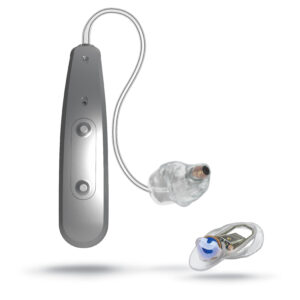
The Earlens Contact Hearing Aid is a non-surgical hearing solution that combines a behind-the-ear processor, a custom ear tip, and a tympanic lens. Dr. Neil M. Sperling and his audiology team provide evaluation and fitting services for patients interested in advanced hearing technology in Manhattan. Visit the Earlens Site here!
How it Works
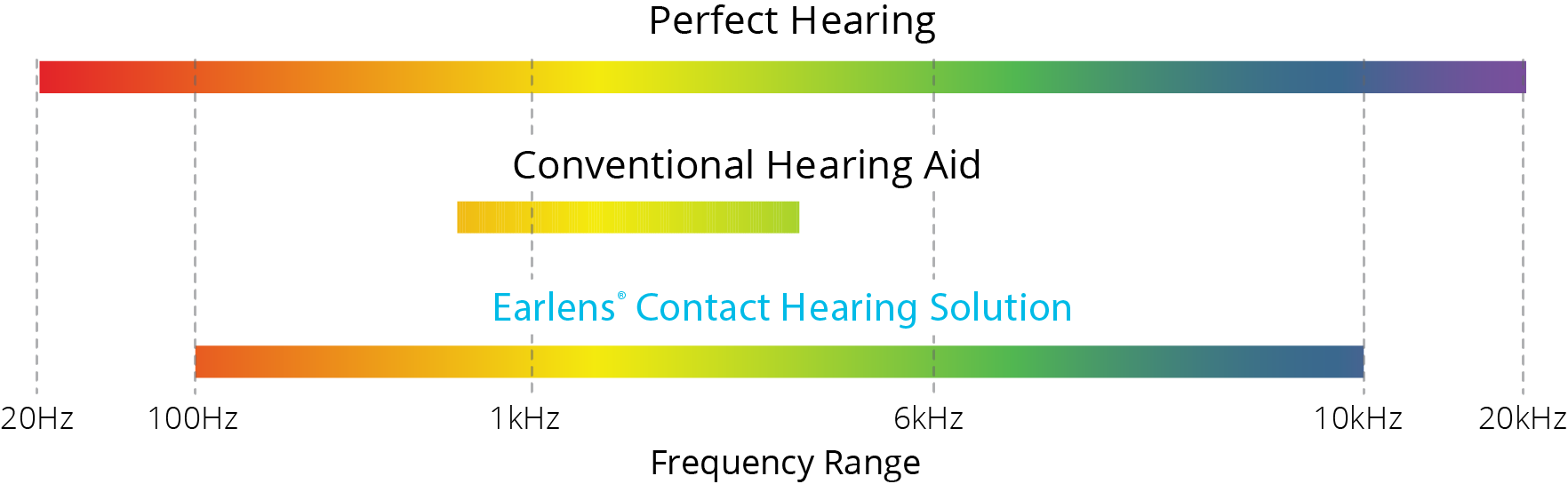
The Earlens contact hearing solution features a small, custom lens placed on the eardrum. A behind-the-ear processor picks up sound and transmits it through an ear tip in the ear canal. This tip sends an electromagnetic signal to the lens on the eardrum, directly stimulating the natural hearing system. By avoiding the feedback issues common with traditional hearing aids, Earlens delivers high gain across a wide frequency range.
What Is the Earlens Hearing Aid?
Earlens is a non-surgical contact hearing device that directly vibrates the eardrum. The system is different from a conventional hearing aid because the sound signal is not simply delivered through a traditional speaker. Instead, the Earlens system uses a processor and custom ear components to activate a small lens positioned against the tympanic membrane.
The FDA classifies Earlens as a tympanic membrane direct-contact hearing aid. The Earlens Contact Hearing Aid received FDA 510(k) clearance in 2019, following an earlier FDA classification of the Earlens technology in 2015.
Earlens Components
The system consists of several components that work together:
- Behind-the-ear processor: Captures and processes incoming sound.
- Custom ear tip: Fits within the ear canal and communicates with the tympanic lens.
- Tympanic lens: A custom component positioned deep in the ear canal against the eardrum.
- Rechargeable power system: Provides power for the external processor.
The current Earlens Contact Hearing Aid uses electromagnetic coupling to transmit the signal and power between the ear tip and tympanic lens.
How Does the Earlens Hearing Aid Work?
The Earlens system is designed to work with the ear’s natural sound-conduction pathway.
Step 1: The processor captures sound
A small processor positioned behind the ear picks up sounds from the surrounding environment.
Step 2: The signal is transmitted to the ear
The processed signal travels to the custom ear tip positioned within the ear canal.
Step 3: The tympanic lens is activated
The signal activates the custom lens positioned against the tympanic membrane.
Step 4: The eardrum is directly stimulated
The lens directly vibrates the eardrum, transmitting mechanical energy through the middle ear toward the inner ear. This approach differs from conventional hearing aids, which generally amplify sound and deliver it through a receiver. The FDA documentation describes the Earlens Contact Hearing Aid as directly vibrating the umbo of the tympanic membrane to transmit sound to the recipient.
How Is Earlens Different From a Traditional Hearing Aid?
Both Earlens and conventional hearing aids are designed to help people with hearing loss, but they use different methods of delivering sound.
| Feature | Earlens | Conventional Hearing Aid |
|---|---|---|
| Sound delivery | Direct stimulation of the eardrum | Amplified sound delivered through a receiver |
| Customization | Custom ear tip and tympanic lens | Device selected and programmed to hearing needs |
| External component | Behind-the-ear processor | May be behind-the-ear, receiver-in-canal, or another design |
| Eardrum contact | Yes | Typically no direct tympanic lens |
| Surgery | Non-surgical placement | Non-surgical |
| Professional fitting | Required | Typically fitted/programmed by an audiologist |
| Hearing evaluation | Required | Required for appropriate device selection |
The important distinction is how the device delivers the processed sound, not simply how small or technologically advanced the hearing aid is.
What Are the Potential Benefits of Earlens?
Earlens may offer a different hearing experience for appropriately selected patients. Potential advantages include:
Direct stimulation of the eardrum
The tympanic lens is designed to directly stimulate the eardrum rather than relying on a conventional speaker to deliver amplified sound.
Broad frequency coverage
Earlens has been designed to provide amplification across a broad frequency range. The current practice page describes coverage from approximately 125 Hz to 10 kHz.
A broader frequency response may be relevant when evaluating sound quality and speech perception, although individual results vary.
Reduced feedback concerns
Because the system uses a direct-contact lens rather than a conventional amplified speaker, the design can help address acoustic feedback in appropriate users.
Custom fit
The Earlens system uses a custom ear impression to create components that correspond to the individual’s ear anatomy.
Wireless connectivity
The FDA documentation for the Earlens Contact Hearing Aid describes wireless connectivity that allows compatible mobile devices to stream calls, music, and other media to the device.
Who May Be a Candidate for Earlens?
Earlens is not appropriate for every person with hearing loss. Candidate selection requires an evaluation of hearing ability, ear anatomy, medical history, and whether the ear can accommodate the device. Published information on the Earlens system has described consideration for people with mild-to-severe hearing loss, while also identifying anatomical and medical factors that can affect candidacy.
An evaluation may consider:
- Degree and type of hearing loss
- Hearing-aid experience
- Ear canal anatomy
- Condition of the eardrum
- History of middle-ear disease
- Previous ear surgery
- Ability to accommodate the custom lens
- Communication needs
- Desired hearing outcomes
A hearing test and examination by an ENT physician and audiology professional are important before determining whether Earlens is appropriate.
Who May Not Be a Candidate?
Certain anatomical or medical conditions may make Earlens unsuitable. Factors that may affect candidacy can include:
- An unsuitable ear canal anatomy
- An abnormal or damaged eardrum
- Certain middle-ear conditions
- Previous ear surgery
- Other conditions that prevent appropriate placement of the tympanic lens
Published technical information on Earlens has specifically identified the need for an intact tympanic membrane and adequate ear-canal anatomy. Candidacy should therefore be determined individually rather than based only on the degree of hearing loss.
Is Earlens a Surgical Hearing Device?
No. Earlens is a non-surgical hearing solution. However, it is different from a typical hearing aid because a custom tympanic lens is positioned deep in the ear canal against the eardrum. The FDA documentation describes placement of the tympanic lens by a trained ENT physician through a non-invasive, non-surgical procedure. This makes Earlens different from surgically implanted hearing devices such as cochlear implants.
How Is Earlens Fitted?
Earlens requires a highly customized fitting process.
1. Hearing evaluation
Your hearing is evaluated to determine the type and degree of hearing loss and whether Earlens may be appropriate.
2. Ear examination
The physician examines the ear canal and eardrum and evaluates the anatomy relevant to placement.
3. Custom ear impression
A detailed impression is used to create the custom components needed for the Earlens system.
4. Tympanic lens placement
The custom lens is positioned deep within the ear canal against the eardrum by a trained ENT physician.
5. Audiologic programming
The audiologist uses the patient’s hearing profile to program the processor.
6. Follow-up and adjustments
Follow-up appointments allow the hearing team to assess comfort, hearing performance, and device settings and make adjustments when necessary. The FDA documentation specifically describes audiologist programming based on the recipient’s hearing profile.
Earlens vs. Cochlear Implants: What Is the Difference?
Earlens and cochlear implants are fundamentally different technologies. Earlens is a non-surgical hearing device that works with the patient’s existing natural hearing system by directly stimulating the eardrum. A cochlear implant is an implanted electronic hearing device that bypasses damaged portions of the inner ear and electrically stimulates the auditory nerve.
Cochlear implants are generally considered for people with significant hearing loss who receive insufficient benefit from appropriately fitted hearing aids and meet established candidacy criteria. An evaluation is necessary to determine which hearing technology, if any, is appropriate.
Earlens and Traditional Hearing Aids: Which Is Right for Me?
There is no single hearing device that is appropriate for everyone. A conventional hearing aid may be an appropriate option for many people with hearing loss. Other patients may benefit from specialized hearing technology such as Earlens, bone-conduction devices, implantable hearing devices, or cochlear implants. The decision should take into account:
- Your audiogram
- Type and severity of hearing loss
- Ear anatomy
- Previous hearing-aid experience
- Previous ear disease or surgery
- Communication needs
- Lifestyle
- Comfort preferences
- Medical considerations
- Your treatment goals
The purpose of a hearing evaluation is to identify the technology that is medically and functionally appropriate for the individual—not simply to select the newest device.
Why Is an ENT Physician Involved With Earlens?
Earlens involves a component that sits directly against the tympanic membrane. This makes an examination of the ear and appropriate assessment of the anatomy particularly important. The Earlens fitting process can involve collaboration between:
- ENT physician/otologic surgeon
- Audiologist
- Hearing technology specialist
The ENT physician evaluates the health and anatomy of the ear and participates in the custom fitting process. The audiologist evaluates hearing and programs the processor according to the patient’s hearing needs. This physician-audiologist collaboration is an important part of the Earlens care pathway.
Earlens Hearing Aid in New York City
Dr. Neil Sperling‘s Hearing and Balance Center provides evaluation and hearing technology services for patients in Manhattan who are interested in advanced hearing solutions. Dr. Sperling has focused on hearing disorders and hearing restoration since 1991 and serves as Medical Director of Hearing Healthcare and Technologies in the Department of Otolaryngology at Lenox Hill Hospital.
His clinical expertise includes hearing loss, otosclerosis, conductive hearing loss, cochlear implantation, implantable hearing devices, and other ear and hearing disorders. The audiology team provides hearing evaluations, hearing-aid services, and individualized hearing technology support.
Dr. Sperling’s Testimonial
Dr. Gold’s Testimonial
Learn More About The Earlens Hearing Aid
Frequently Asked Questions
The Earlens Hearing Aid is a non-surgical contact hearing device that uses a custom tympanic lens positioned on the eardrum to directly stimulate the natural hearing system. Unlike traditional hearing aids that amplify sound through a speaker in or near the ear canal, Earlens transmits sound via electromagnetic signals to the lens, providing direct mechanical stimulation to the eardrum.
The Earlens system captures sound with a behind-the-ear processor, which sends the processed signal through a custom ear tip in the ear canal. This tip transmits an electromagnetic signal to a custom lens placed on the eardrum, which vibrates the eardrum directly to transmit sound through the middle ear to the inner ear, bypassing conventional amplification methods.
Candidates for Earlens typically have mild-to-severe hearing loss and must have suitable ear canal anatomy and an intact eardrum. A thorough evaluation by an ENT physician and audiologist is necessary to assess hearing ability, ear anatomy, medical history, and the ability to accommodate the custom tympanic lens.
No, the Earlens Hearing Aid is a non-surgical hearing solution. The custom tympanic lens is placed deep in the ear canal against the eardrum through a non-invasive, non-surgical procedure performed by a trained ENT physician, distinguishing it from surgically implanted devices like cochlear implants.
The Earlens system includes a behind-the-ear processor that captures sound, a custom ear tip that fits in the ear canal, a custom tympanic lens positioned on the eardrum, and a rechargeable power system. These components work together using electromagnetic coupling to transmit sound and power to the lens.
Earlens offers direct stimulation of the eardrum, broad frequency coverage from approximately 125 Hz to 10 kHz, reduced feedback issues due to its design, a custom fit based on ear anatomy, and wireless connectivity for streaming calls and media from compatible devices. These features may improve sound quality and speech perception for some users.
Fitting Earlens requires a custom ear impression to create the ear tip and tympanic lens tailored to the individual's ear anatomy. The fitting process involves evaluation by audiology professionals and ENT physicians to ensure proper placement and optimal hearing outcomes.
Not everyone with hearing loss is suitable for Earlens. Factors such as abnormal or damaged eardrums, certain middle-ear conditions, previous ear surgeries, or unsuitable ear canal anatomy may disqualify a person. Individual candidacy must be determined through comprehensive medical and audiological evaluation.
Yes, because Earlens uses a direct-contact lens to stimulate the eardrum rather than an amplified speaker, it can reduce acoustic feedback problems that are common with conventional hearing aids, improving the listening experience for appropriate users.





