
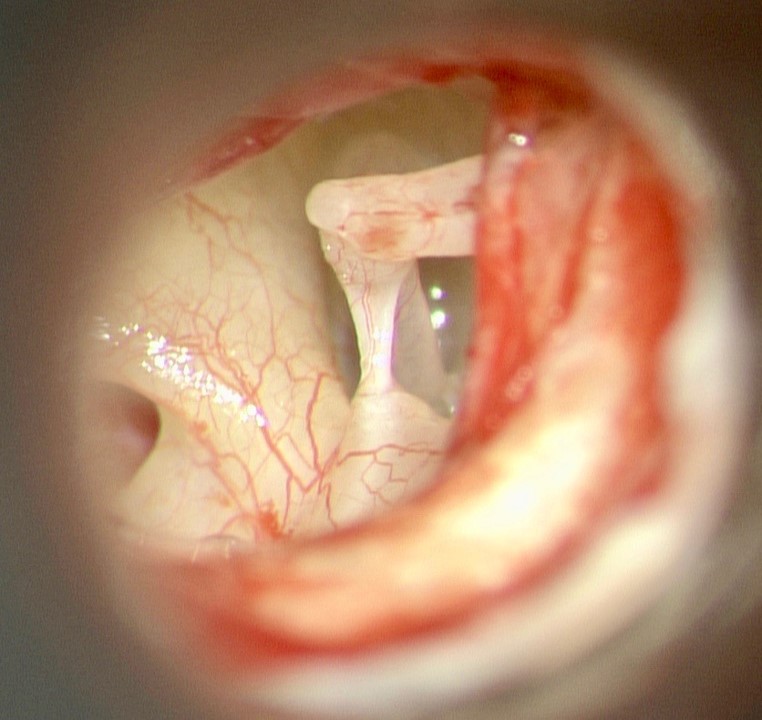
Ossicular chain reconstruction is a type of middle ear surgery used to repair or replace damaged or disconnected hearing bones and improve conductive hearing loss. The procedure may be recommended when one or more of the tiny bones of the middle ear—the malleus, incus, or stapes—cannot effectively transmit sound from the eardrum to the inner ear.
Dr. Neil Sperling is an experienced New York City ear surgeon who evaluates patients with conductive hearing loss and other conditions affecting the middle ear. Each patient’s anatomy, hearing loss, and underlying cause are carefully evaluated to determine whether ossicular chain reconstruction is appropriate.
What Is the Ossicular Chain?
The ossicular chain consists of three tiny bones in the middle ear:
- Malleus (hammer)
- Incus (anvil)
- Stapes (stirrup)
These three bones form a connected mechanical system between the eardrum and the inner ear. When sound reaches the eardrum, the ossicles vibrate and transmit those vibrations through the middle ear to the cochlea, where they are converted into nerve signals that the brain interprets as sound.
Damage or disruption of this system can prevent sound from being transmitted efficiently. This commonly results in conductive hearing loss.
What Causes Ossicular Chain Damage?
The ossicles can become damaged, displaced, eroded, or disconnected for a number of reasons. Common causes include:
- Chronic middle ear infections
- Cholesteatoma
- Trauma or skull fractures
- Previous ear surgery
- Eardrum perforation or other middle ear problems
- Congenital abnormalities of the middle ear
- Erosion of the ossicles caused by long-standing disease
The specific cause of the damage is important because it can influence both the surgical approach and the type of reconstruction that is possible.
What Is Ossicular Chain Reconstruction Surgery?
Ossicular chain reconstruction, sometimes called ossicular reconstruction or middle ear hearing restoration surgery, is performed to restore the mechanical connection that allows sound to travel through the middle ear. Depending on the condition of the ossicles, reconstruction may involve repairing the existing bones or replacing a damaged or missing ossicle with a small prosthesis or graft.
The goal is to create a stable connection that efficiently transfers sound from the eardrum to the inner ear. Because every patient’s middle-ear anatomy is different, there is no single reconstruction technique that is appropriate for everyone. Dr. Sperling determines the most appropriate approach after evaluating the ear and the underlying cause of the hearing loss.
Who May Benefit From Ossicular Reconstruction?
Ossicular chain reconstruction may be considered for patients who have conductive hearing loss caused by damage or disruption of the middle-ear bones. Patients may be candidates when hearing loss is associated with conditions such as chronic ear disease, cholesteatoma, trauma, congenital abnormalities, or previous ear surgery. A complete evaluation typically includes a detailed medical and ear history, examination of the ear, and hearing testing. Imaging may also be appropriate in certain cases. Not every patient with conductive hearing loss requires ossicular reconstruction. The appropriate treatment depends on the condition of the eardrum, middle ear, ossicles, and inner ear.
How Does Ossicular Reconstruction Restore Hearing?
The purpose of reconstruction is to re-establish the pathway that carries sound through the middle ear. When the ossicular chain is damaged or disconnected, sound energy may not efficiently reach the inner ear. During reconstruction, the surgeon repairs or replaces the damaged portion of the chain so that vibrations from the eardrum can once again be transmitted toward the cochlea.
The amount of hearing improvement depends on several factors, including:
- The cause and extent of ossicular damage
- The condition of the eardrum
- The health of the middle ear
- Whether infection or cholesteatoma is present
- The condition of the inner ear
- The specific reconstruction that can be performed
For this reason, hearing results cannot be predicted solely from the diagnosis. Each patient’s case needs to be evaluated individually.
What Happens During Ossicular Chain Reconstruction?
Ossicular reconstruction is generally performed as an outpatient surgical procedure. The exact surgical technique depends on which ossicles are damaged and the condition of the surrounding middle-ear structures. The surgeon accesses the middle ear and evaluates the ossicular chain. Damaged or non-functioning portions may be repaired or removed, and a small prosthesis or graft may be used to reconstruct the sound-transmitting pathway.
The procedure is typically performed through the ear canal when appropriate. The operation may take approximately an hour, although surgical time varies depending on the complexity of the case.
Recovery After Ossicular Chain Reconstruction
Because the middle ear needs time to heal, hearing improvement is not necessarily immediate.
Patients are generally able to return to many normal activities relatively quickly, but specific postoperative restrictions are important during the healing period. Your surgeon will provide instructions regarding activities, keeping the ear dry, medications, and follow-up care. A follow-up hearing test is performed after the ear has healed sufficiently to determine how well hearing has responded to the reconstruction.
What Results Can Be Expected?
The primary goal of ossicular chain reconstruction is to improve the transmission of sound through the middle ear and reduce conductive hearing loss. Many patients experience meaningful improvement in hearing following successful reconstruction. However, the degree of improvement varies from patient to patient.
In some cases, the reconstructed ossicular chain may remain functional for many years. In other cases, scar tissue, recurrent middle ear disease, movement of a prosthesis, or other factors can affect the result and may require additional treatment or revision surgery.
Ossicular Chain Reconstruction vs. Hearing Aids
Ossicular reconstruction and hearing aids address conductive hearing loss in different ways.
A hearing aid amplifies sound electronically, while ossicular reconstruction attempts to restore the natural mechanical pathway through the middle ear. Whether surgery, a hearing aid, or another treatment is most appropriate depends on the cause of the hearing loss, the condition of the ear, previous treatments, and the patient’s individual circumstances.
An ear specialist can help determine which option is most appropriate after a comprehensive evaluation.
Why Choose Dr. Neil Sperling for Ossicular Reconstruction?
Ossicular chain reconstruction requires a detailed understanding of the delicate anatomy of the middle ear and the factors that affect hearing.
Dr. Neil Sperling specializes in ear and hearing disorders and has extensive experience evaluating and treating conditions involving the middle ear and ossicular chain.
His approach is individualized: rather than using the same reconstruction technique for every patient, he evaluates the specific anatomy and cause of hearing loss to determine the most appropriate treatment.
The practice also maintains a focus on advances in ear surgery, hearing restoration, and technologies that can improve patient care.
Frequently Asked Questions
Ossicular chain reconstruction is a middle ear surgery that repairs or replaces damaged or disconnected tiny hearing bones—the malleus, incus, or stapes—to improve conductive hearing loss by restoring sound transmission from the eardrum to the inner ear.
Damage to the ossicular chain can result from chronic middle ear infections, cholesteatoma, trauma or skull fractures, previous ear surgeries, eardrum perforations, congenital abnormalities, or erosion caused by long-standing disease. The cause influences the surgical approach and reconstruction type.
Patients with conductive hearing loss due to damage or disruption of the middle ear bones may benefit from ossicular reconstruction. Candidates often have conditions like chronic ear disease, cholesteatoma, trauma, congenital abnormalities, or prior ear surgery, but a thorough evaluation is necessary to determine suitability.
The surgery restores the mechanical connection between the eardrum and inner ear by repairing or replacing damaged ossicles, allowing sound vibrations to be efficiently transmitted to the cochlea. Hearing improvement depends on factors like the extent of damage, eardrum condition, middle ear health, and inner ear status.
The surgeon accesses the middle ear, evaluates the ossicular chain, and repairs or replaces damaged bones using prostheses or grafts. The procedure is usually outpatient, performed through the ear canal when possible, and typically lasts about an hour, though time varies with case complexity.
Recovery involves allowing the middle ear to heal, during which hearing improvement may not be immediate. Patients can usually resume many normal activities quickly but must follow specific postoperative instructions regarding ear care, activity restrictions, medications, and follow-up visits, including hearing tests.
Many patients experience meaningful hearing improvement, but results vary based on individual factors like the cause and extent of damage and middle ear condition. Some reconstructions remain functional for years, while others may require revision due to scar tissue, disease recurrence, or prosthesis issues.
Ossicular reconstruction restores the natural mechanical pathway for sound transmission in the middle ear, while hearing aids electronically amplify sound. The best option depends on the cause of hearing loss, ear condition, prior treatments, and patient circumstances, determined by an ear specialist.
Dr. Neil Sperling specializes in ear and hearing disorders with extensive experience in middle ear and ossicular chain conditions. He offers individualized treatment plans based on detailed evaluation of each patient's anatomy and hearing loss cause, utilizing advanced surgical techniques and technologies to optimize outcomes.





